
South Korea’s Ministry of Land, Infrastructure and Transport (MOLIT) and the Incheon International Airport Corporation (IIAC) have completed the massive Phase 4 expansion of Incheon International Airport (ICN), officially inaugurating commercial operations in the expanded Terminal 2 concourse on Tuesday, December 3. Following an official grand opening ceremony on November 29, the 4.84 trillion KRW (approx. $3.6 billion) project boosts Incheon Airport’s annual passenger capacity from 77 million to 106 million passengers per year. This milestone elevates Incheon into the world’s third-largest mega-hub airport, trailing only Hong Kong Chek Lap Kok and Dubai International Airport. MOLIT Official Press Release
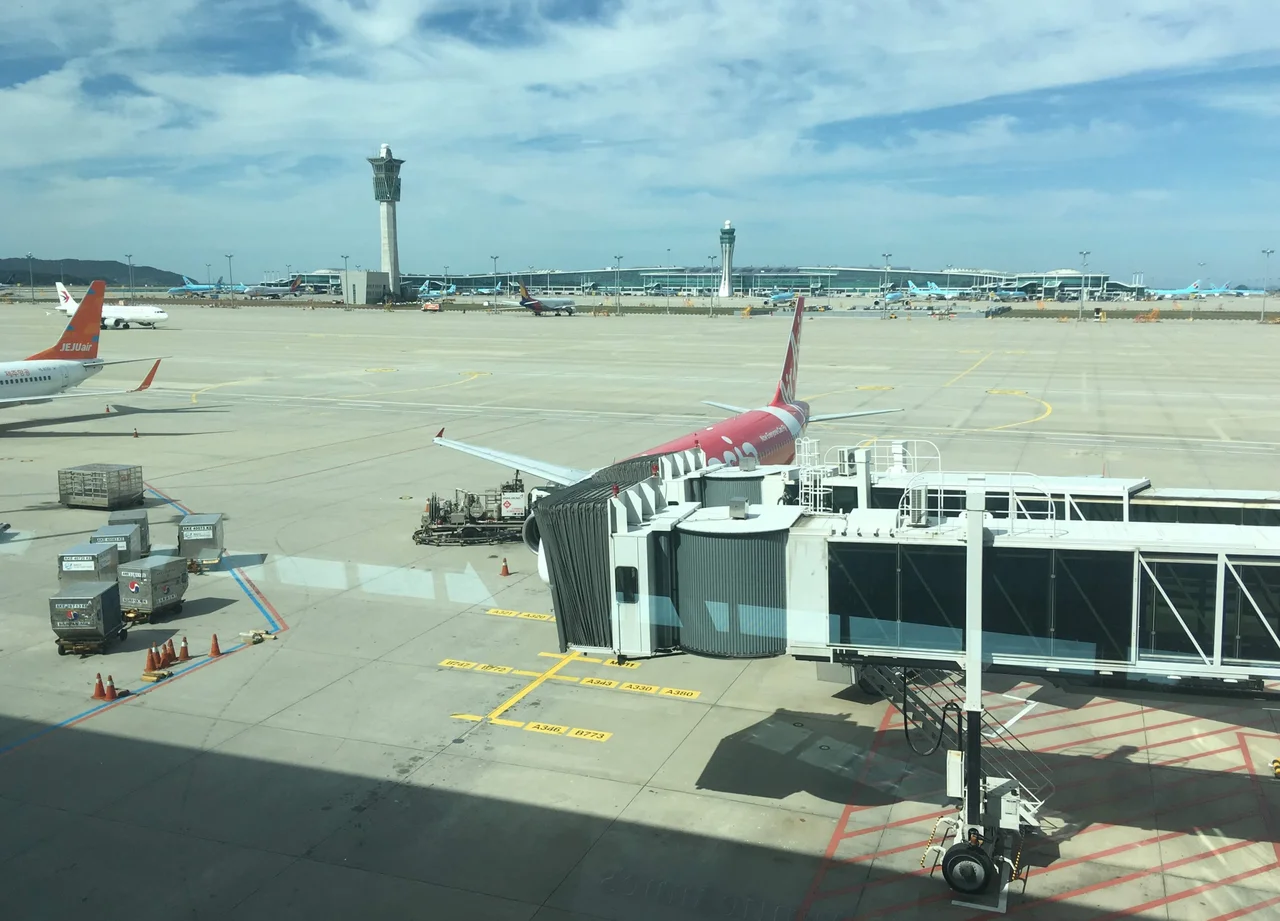
Incheon Airport Phase 4 Key Metrics Comparison
Phase 4 represents a comprehensive expansion encompassing terminal concourses, runway infrastructure, aircraft aprons, and automated logistics systems. Notably, Incheon Airport becomes the world’s first airport to simultaneously operate two ultra-large passenger terminals (Terminal 1 and Terminal 2), each capable of handling over 50 million international travelers annually.
| Metric | Before Phase 4 | After Phase 4 | Net Change & Strategic Impact |
|---|---|---|---|
| Annual Passenger Capacity | 77 million | 106 million | +29 million (Joins global top 3 mega-hub ranks) |
| Terminal 2 (T2) Floor Area | 387,000 ㎡ | 734,000 ㎡ | +347,000 ㎡ (Near doubling of total concourse space) |
| Runway Infrastructure | 3 active runways | 4 active runways | Peak hourly movement capacity increases from 90 to 107 slots |
| Annual Flight Movements | ~500,000 flights | ~600,000 flights | Eliminates slot bottlenecks and boosts on-time reliability |
| Air Cargo Capacity | 5.0 million tons | 6.3 million tons | Strengthens world #2 cargo hub status for semiconductor export |
| Aircraft Parking Stands | 163 stands | 238 stands | +75 stands (62 passenger gates & 13 dedicated cargo positions) |
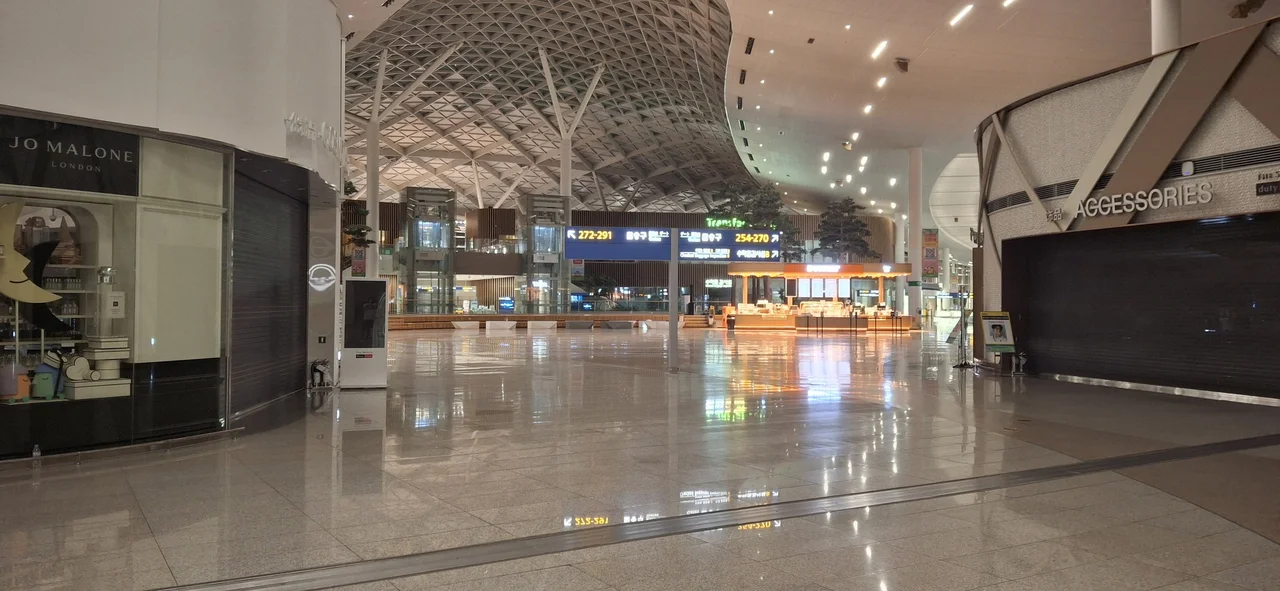
SmartPass Biometrics and Next-Generation Screening
Along with expanded physical footprints, the terminal upgrade introduces an array of smart digital services designed to accelerate passenger processing times:
- Facial Recognition ‘SmartPass’ Nationwide Expansion:
- Passengers registering their passport data, facial biometrics, and mobile boarding pass on the official “ICN SmartPass” mobile app can bypass standard document checks at departure entrances and boarding gates.
- Facial scanners automatically verify traveler identities without requiring physical passports or boarding passes to be repeatedly extracted from pockets or bags.
- Next-Generation 3D CT Baggage Scanners:
- The expanded security screening checkpoints feature circular body scanners and advanced 3D Computed Tomography (CT) X-ray units.
- Travelers passing through these designated smart lanes are no longer required to remove laptops, tablet PCs, or travel-sized liquids from their carry-on luggage, drastically reducing queue bottlenecks.
- Massive Self Bag Drop Infrastructure:
- Passengers who complete online or mobile check-in can print luggage tags at automated self-tagging kiosks and drop bags at automated conveyer lanes in two to three minutes, bypassing airline desk queues.
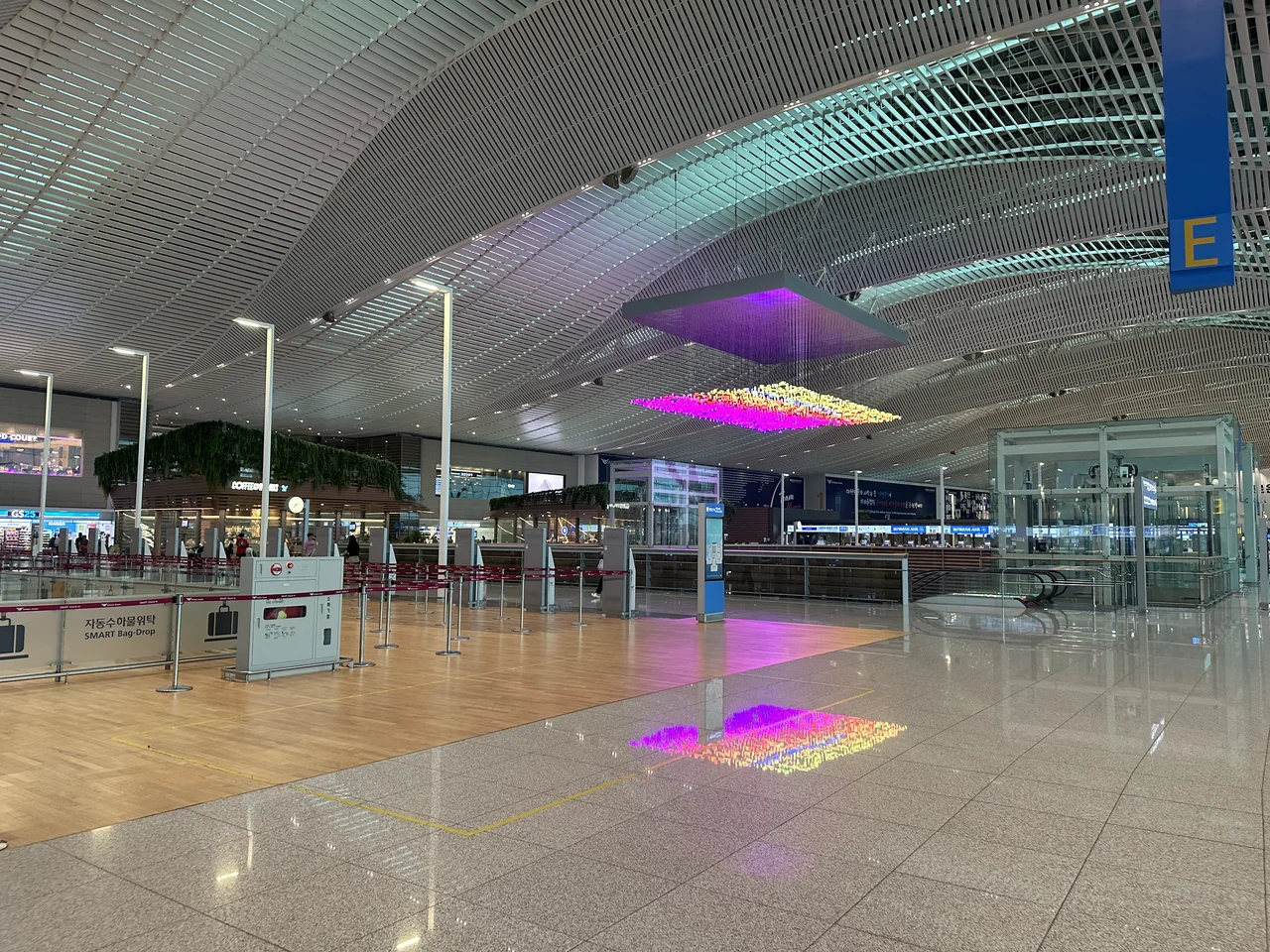
Terminal Airline Allocations and Consolidation Roadmap
With Terminal 2’s east and west wings expanded, airline terminal allocations remain distinct while preparing for future consolidation:
| Terminal Concourse | Current Operating Airlines | Terminal Characteristics & Roadmap |
|---|---|---|
| Terminal 2 (T2) | Korean Air, Delta Air Lines, Air France, KLM, Jin Air, Garuda Indonesia, XiamenAir, China Airlines | SkyTeam alliance hub; concentrated SmartPass and Self Bag Drop lanes |
| Terminal 1 (T1) | Asiana Airlines, Jeju Air, T’way Air, Aero K, Eastar Jet, Air Seoul, Air Busan, foreign carriers | Asiana Airlines, Star Alliance, and diverse LCC networks |
| Concourse (CA) | Foreign international airlines & select low-cost carriers | Accessible via automated Intra-Airport Transit (IAT) train from T1 |
Following the completion of the Korean Air and Asiana Airlines corporate merger and subsequent integration of subsidiary LCCs, Asiana Airlines is scheduled for phased relocation to Terminal 2. Until then, Asiana passengers must continue to use Terminal 1, while Korean Air passengers use Terminal 2.
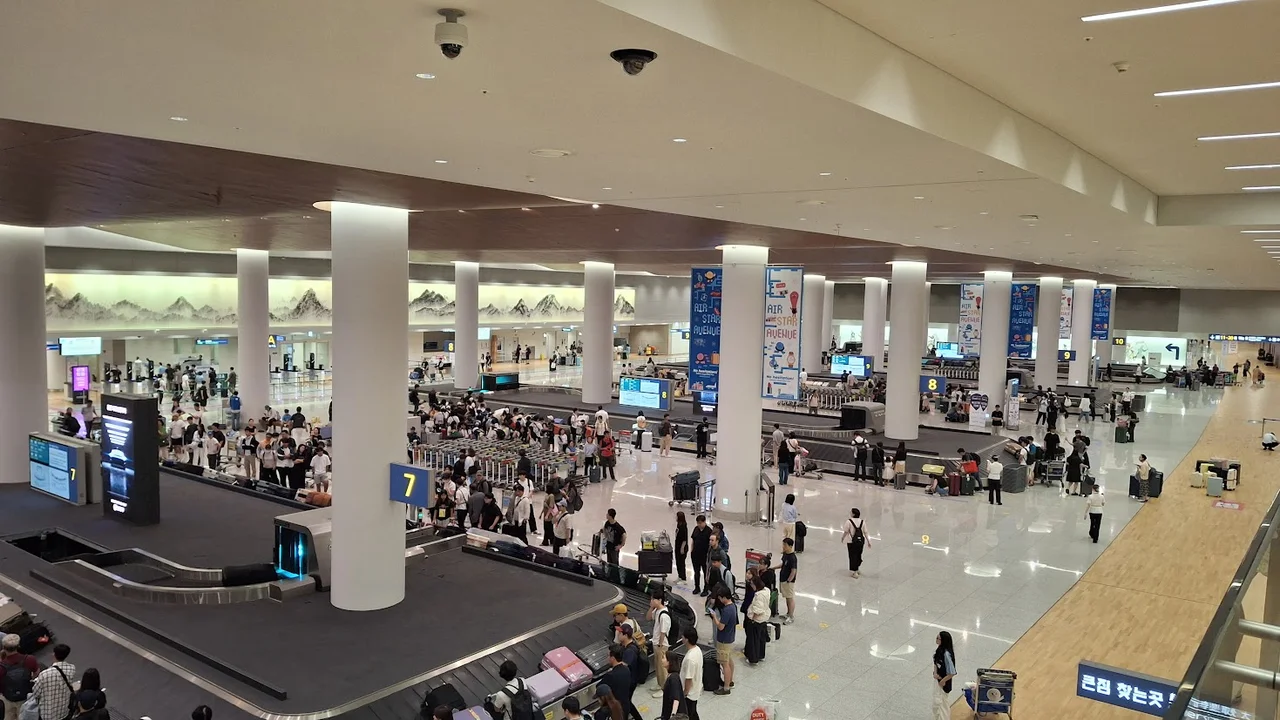
Essential Traveler Checklist and Practical Walking Advice
Travelers departing from or arriving at the expanded Terminal 2 should keep the following practical guidelines in mind:
- Extended Walking Times to Outer Concourse Gates:
- Because Terminal 2 has been extended significantly along both eastern and western wingtips, walking from the central duty-free shopping plaza to the furthest new gates can take 15 to 20 minutes on foot.
- Review the boarding gate printed on your mobile pass or terminal departure screens, and begin walking to your gate at least 35 to 40 minutes prior to scheduled departure.
- Pre-Register on the SmartPass App:
- While SmartPass registration kiosks are available throughout terminal check-in lobbies, travelers are strongly advised to download the “ICN SmartPass” app and complete biometric enrollment at home the day before travel to avoid terminal Wi-Fi or queue congestion.
- Biometric registration is valid for individuals aged 7 and above and remains active for five years tied to passport validity (boarding passes must still be synced for each departure).
- Double-Check Operating Airline for Codeshare Flights:
- Always confirm the terminal based on the actual operating carrier rather than the ticketing airline on codeshare itineraries.
- For instance, Delta-ticketed passengers boarding Korean Air metal must check in at Terminal 2. Free inter-terminal shuttle buses between T1 and T2 take approximately 15 to 20 minutes, while the AREX train requires 6 minutes; missing your terminal can lead to denied boarding.
- Cultural Gardens and Rest Amenities:
- The expanded concourse features traditional relaxation spaces including the landscaped “Traditional Korean Garden” and “Open Pavilion Garden,” alongside monumental kinetic media facades in the central atrium. These offer quiet respite during lengthy layovers or pre-flight waiting periods.
Related News
- MOLIT Approves Winter 2026 Flight Schedule: 4,882 Weekly International Flights & Regional Slot Boost
- Korean Air to Launch Daily Seoul Incheon–Newark Flights in May 2027: KE097·KE098 Schedule & Transit Guide
- Korean Air & Asiana Merger Roadmap: Asiana Mileage Integration & Star Alliance Transition
Was this post helpful?

Leave a note
A question, a tip, or your own experience. No account needed.
Loading comments…