 Korean
Singapore Airlines SQ232 Sydney–Singapore Review
Today I’m writing up my experience on Singapore Airlines SQ232, flying from Sydney to Singapore.
Sydney Kingsford Smith International Airport
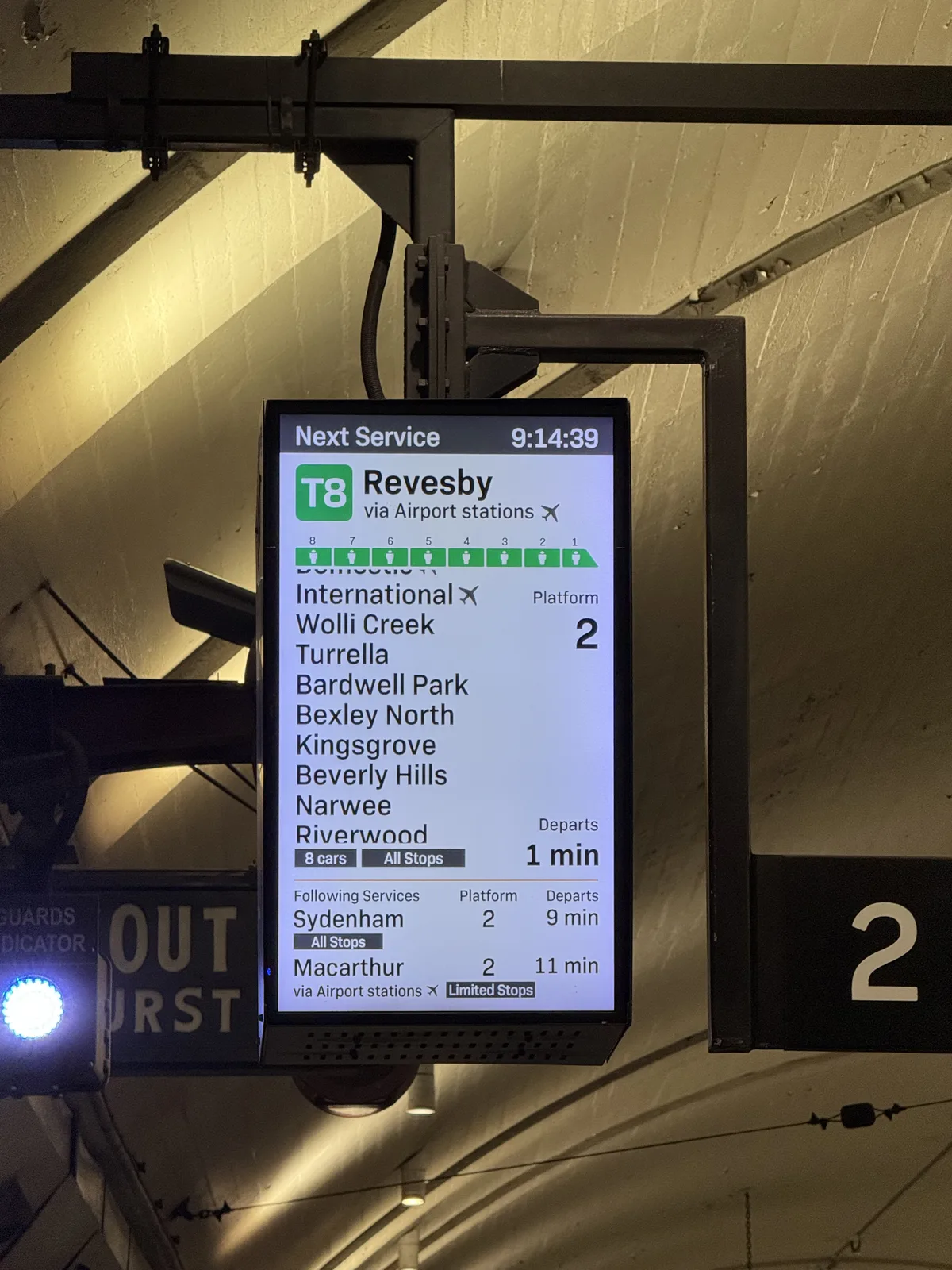
After checking out of the hotel, I took the airport train from the Sydney CBD directly to Sydney International Airport. Singapore Airlines operates out of Terminal 1.
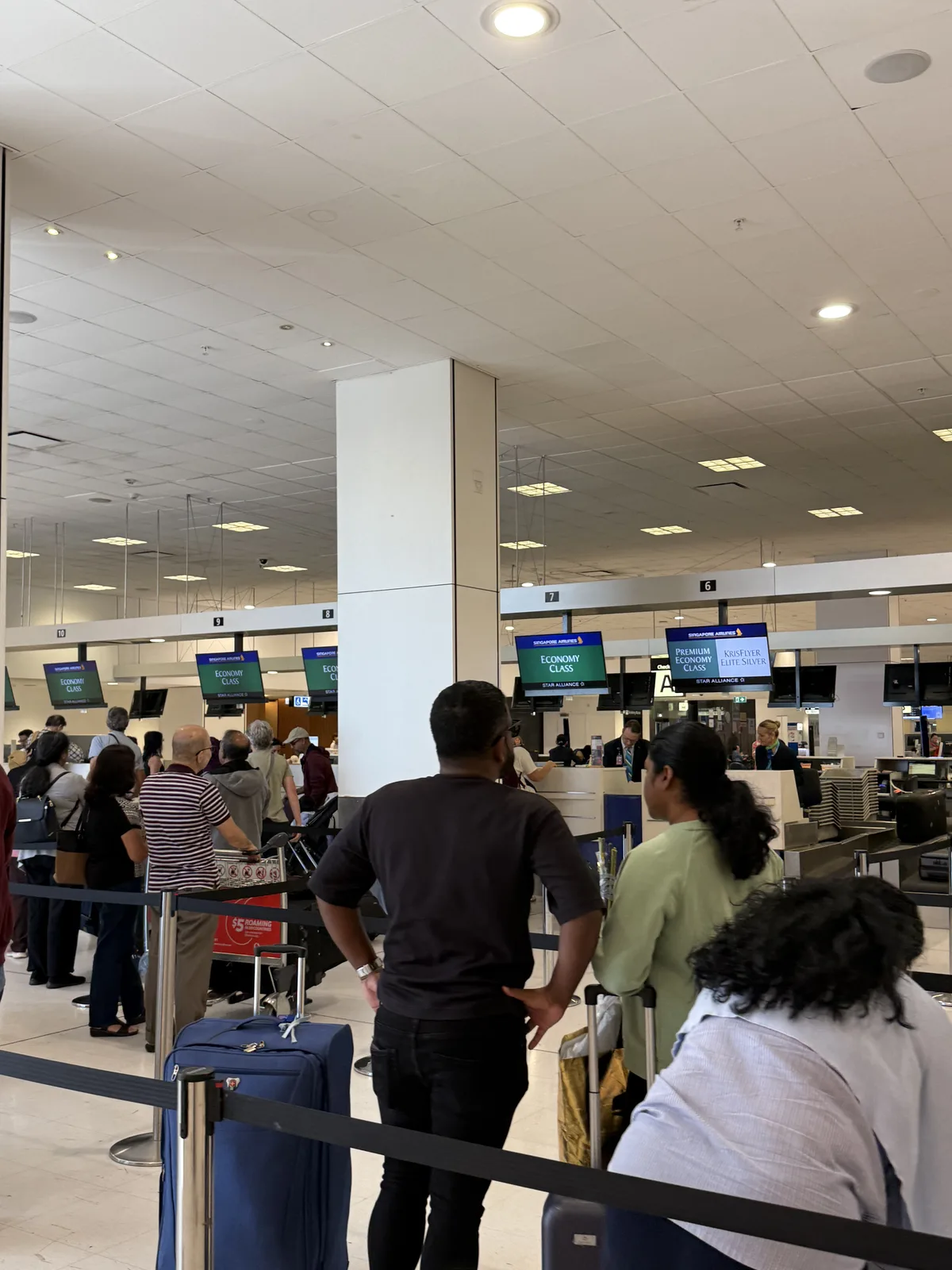
Arriving at the airport, I headed straight to the Singapore Airlines counter to drop off my baggage. Despite there being plenty of counters open, the sheer number of passengers meant it took about 20 minutes to get through.
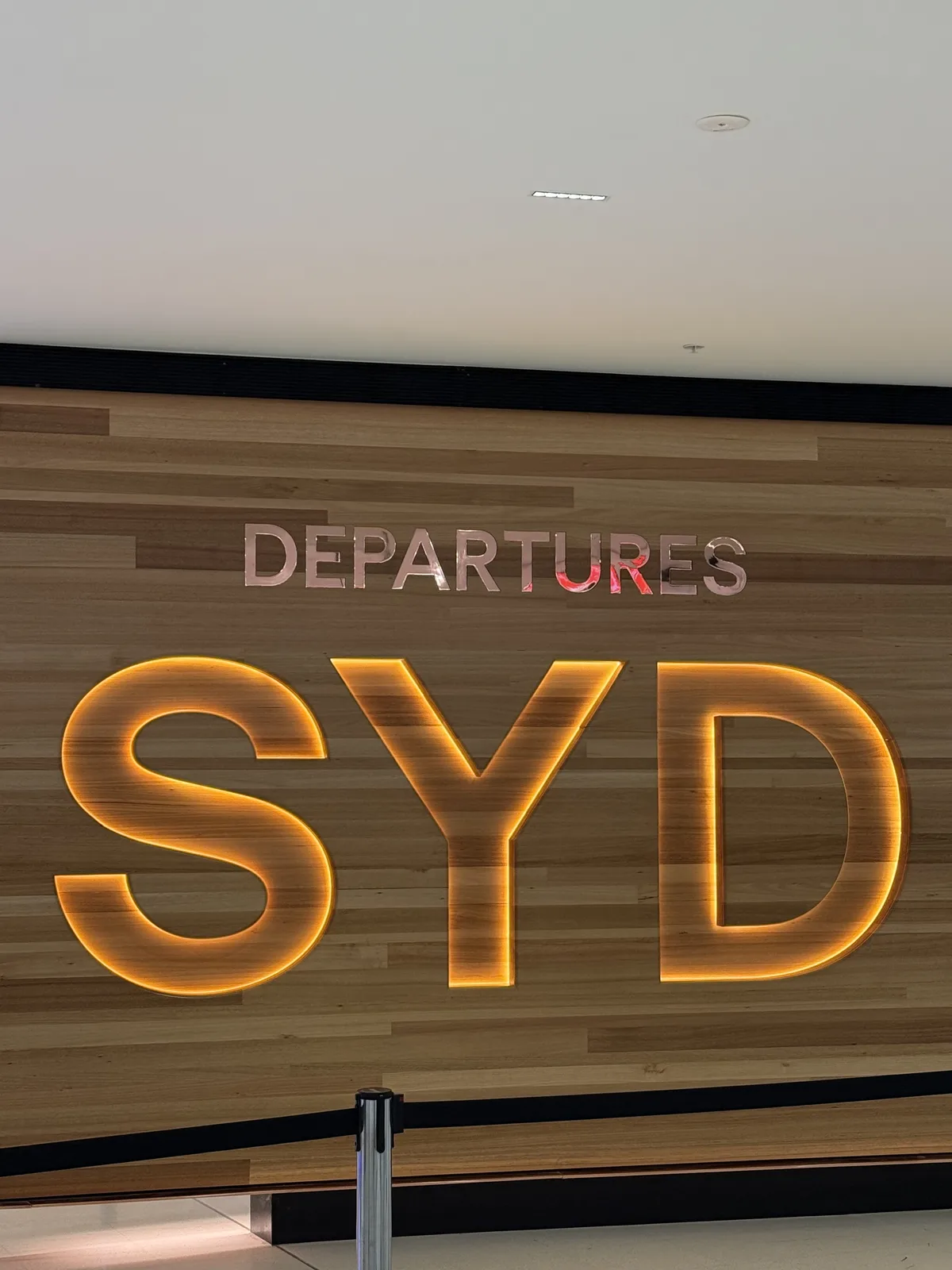
Before heading through security, I spotted the iconic “Good to Go” sign I’d seen so many times online — had to get a photo. Goodbye, Sydney.
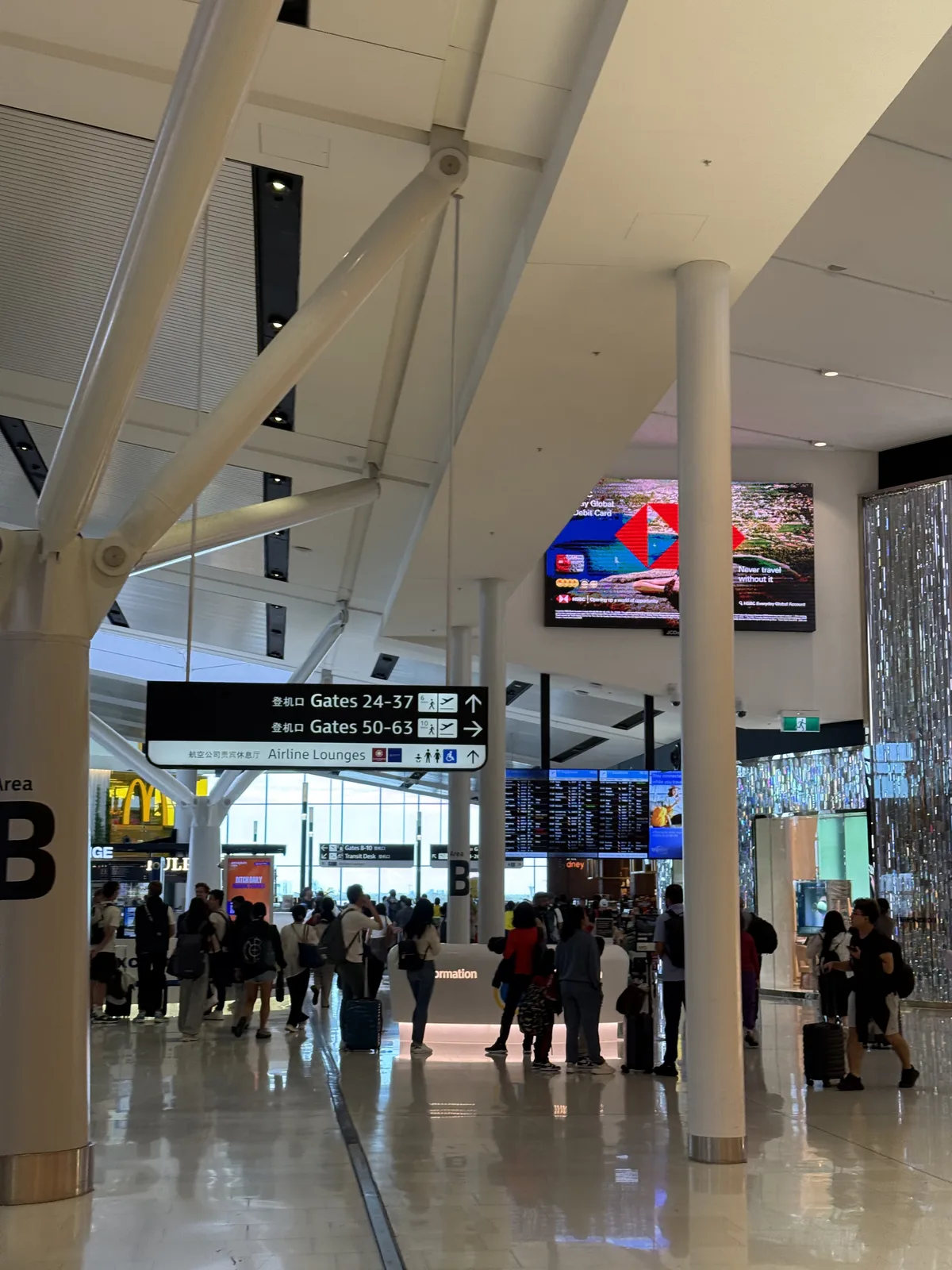
Inside the duty-free zone. With plenty of time to spare, I browsed the shops — plenty of stores, but not much variety. Ended up walking out with over ten packs of Tim Tams. Terminal 1’s facilities were a little dated, but there was a solid food court and plenty of seating, which was appreciated.
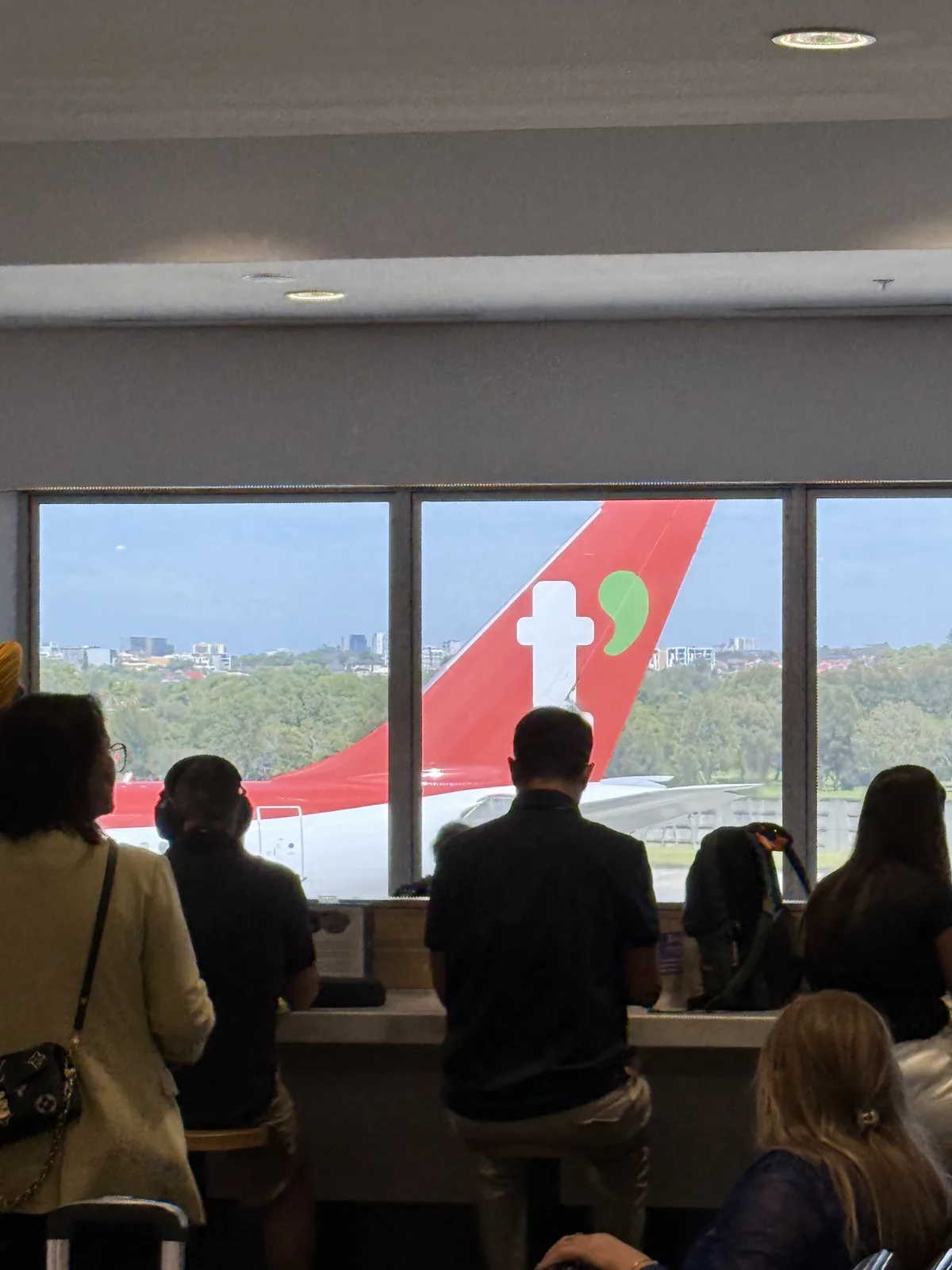
While wandering the terminal, I spotted a T’way Air aircraft parked on the tarmac. Seeing them this far from Korea was quite a surprise. T’way has been expanding rapidly — Europe, Australia, and beyond. With plans to rebrand as Trinity Airlines and open a dedicated check-in terminal at ICN T1, they seem to be pushing hard for a major league upgrade. Word is they’re looking at transatlantic routes next, which would make a Star Alliance membership feel less far-fetched.
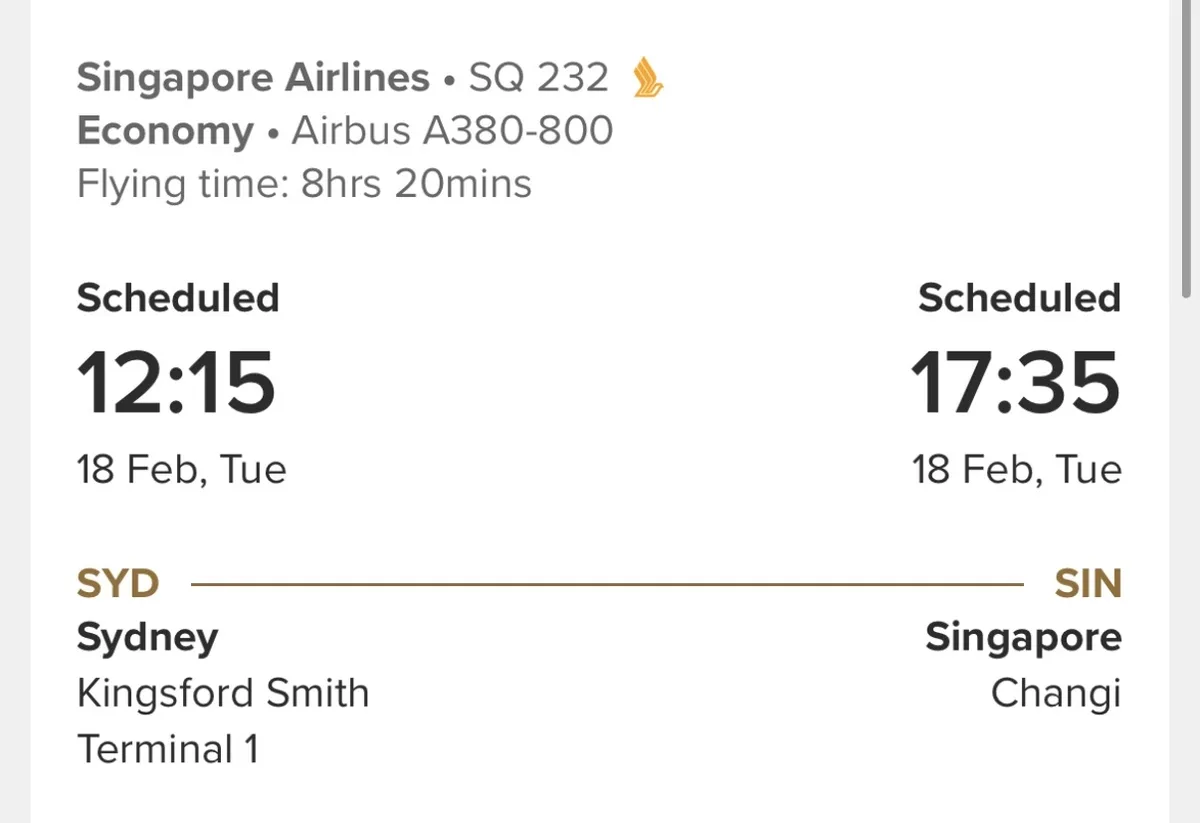
T’way could have flown me straight back to Incheon, but I’m routing through Singapore — partly because Singapore Airlines is my favorite foreign carrier, and partly because the price was competitive.
Boarding
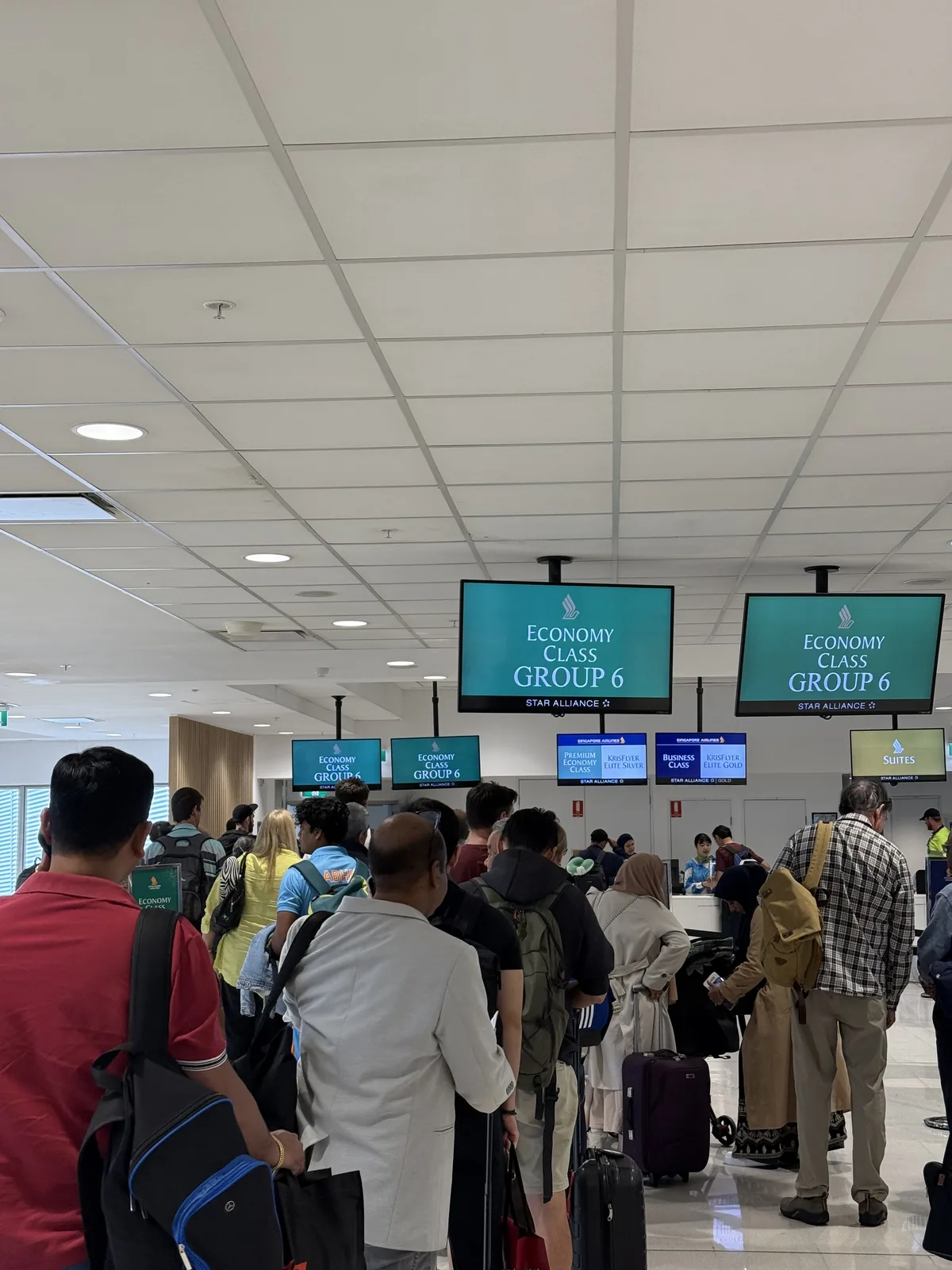
Boarding started almost a full hour before departure. The Sydney–Singapore route uses an A380, which seats upwards of 470 passengers, so the sheer number of people involved is enormous. Even with four boarding lanes operating simultaneously, being in Group 6 meant a long wait before I could step onboard.
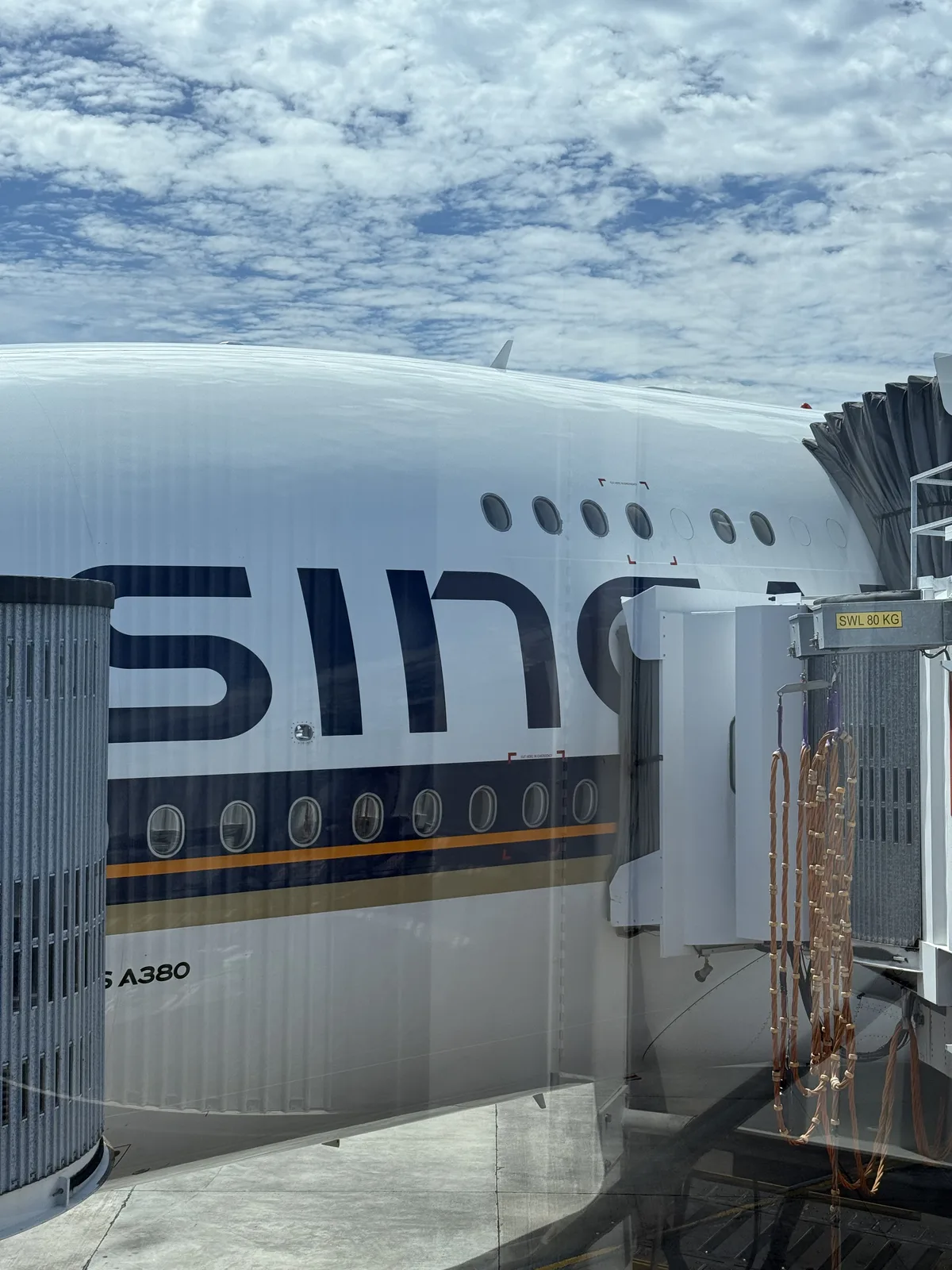
Singapore Airlines A380 boarding
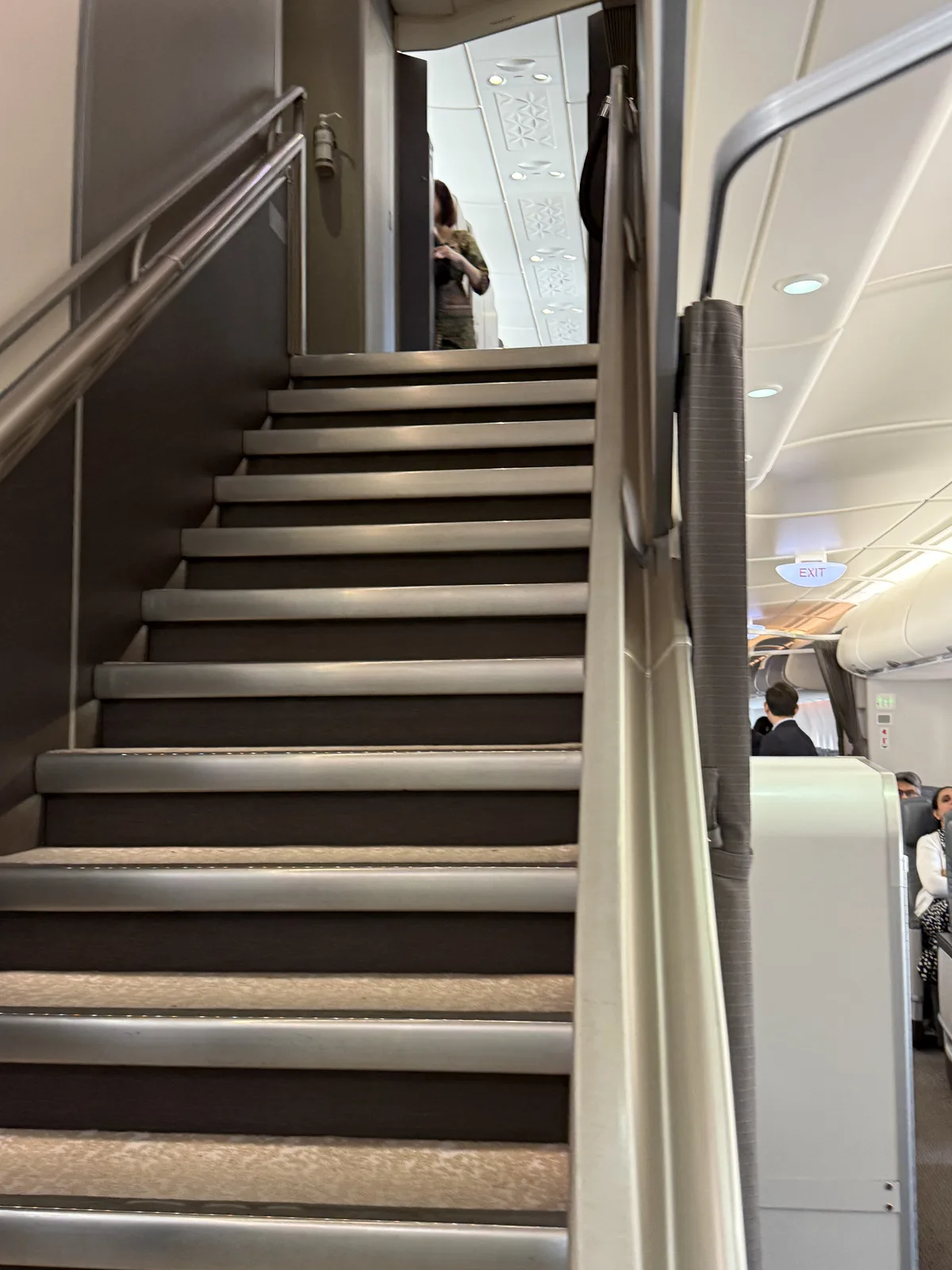
I boarded via jet bridge into the lower deck. Singapore Airlines configures the A380 in four classes — Suites, Business, Premium Economy, and Economy. The upper deck houses Suites and Business; the lower deck is home to Premium Economy and Economy.
Seat
Economy is arranged in a 3-4-3 configuration.
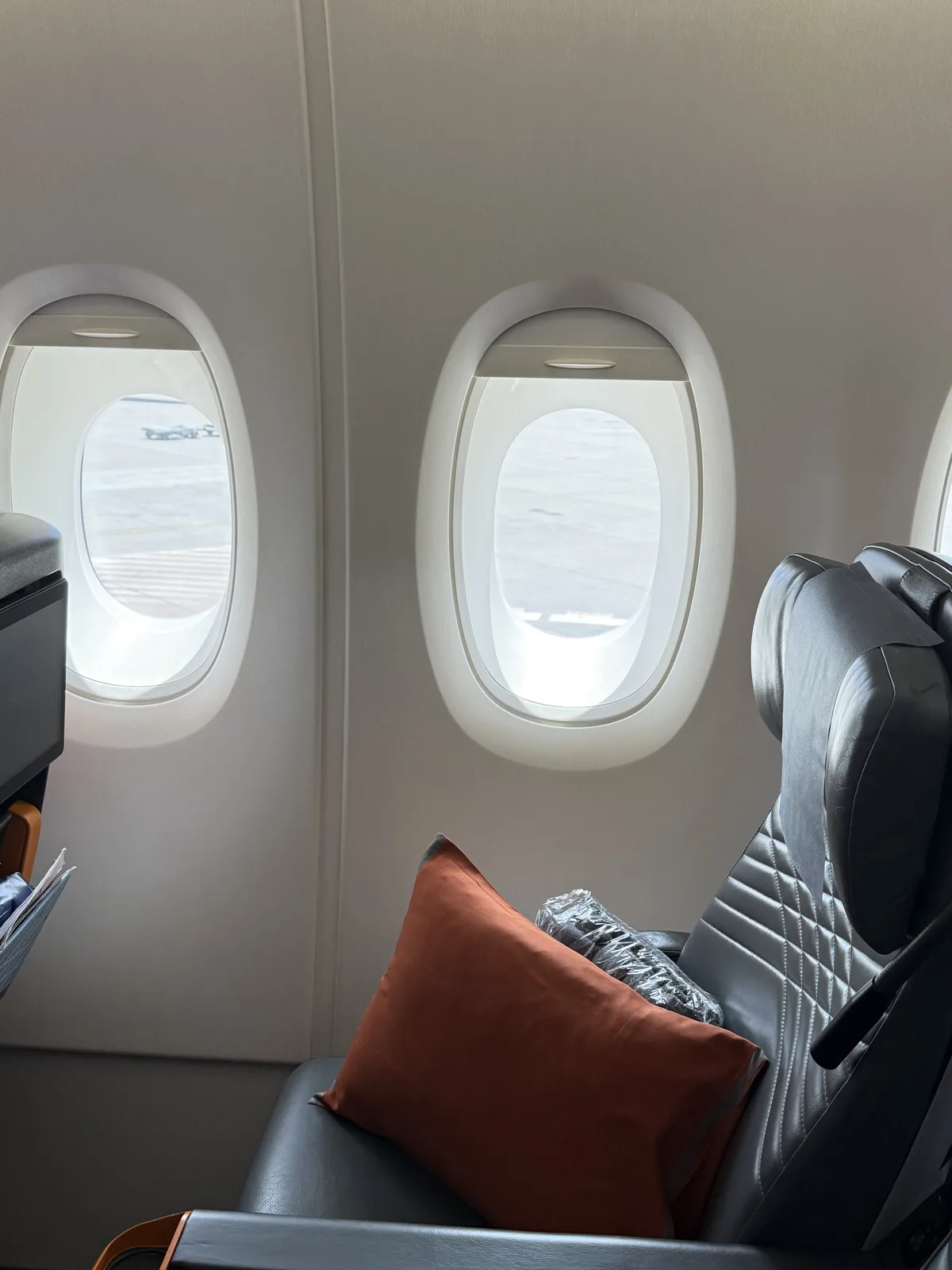
The seat itself was thick, cushioned, and genuinely comfortable, with generous legroom. A soft pillow and blanket were provided, along with an amenity kit containing earphones, a toothbrush, and an eye mask in a pouch.
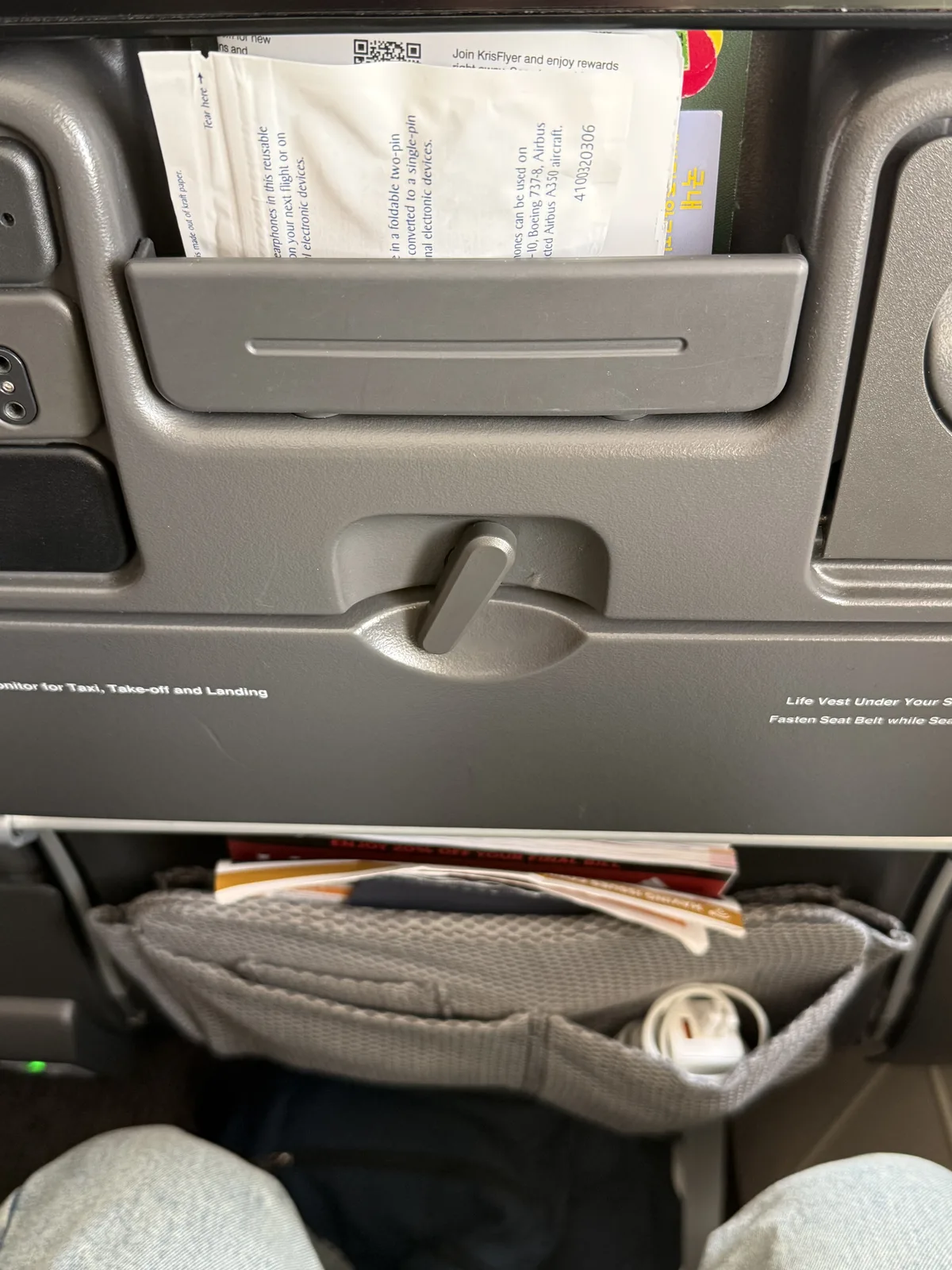
There was ample storage around the seat, and a shared power outlet beneath was compatible with both 220V and 110V plugs.
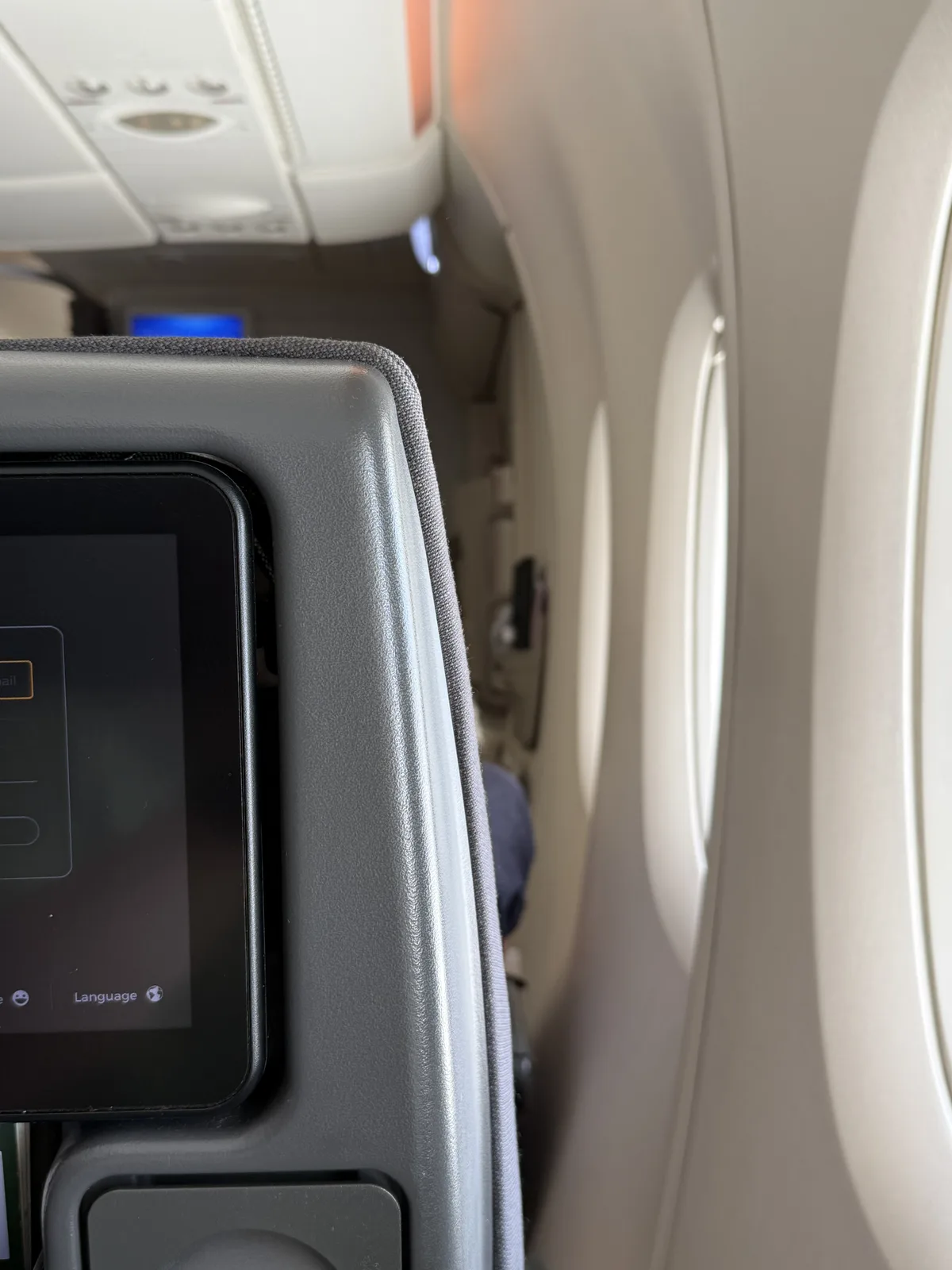
One of the A380’s distinctive features is the wide gap between the window seats and the fuselage wall. On long-haul flights, tucking a pillow into that gap and leaning against it makes for an incredibly comfortable sleeping position. The headrest is also adjustable to suit different body types.
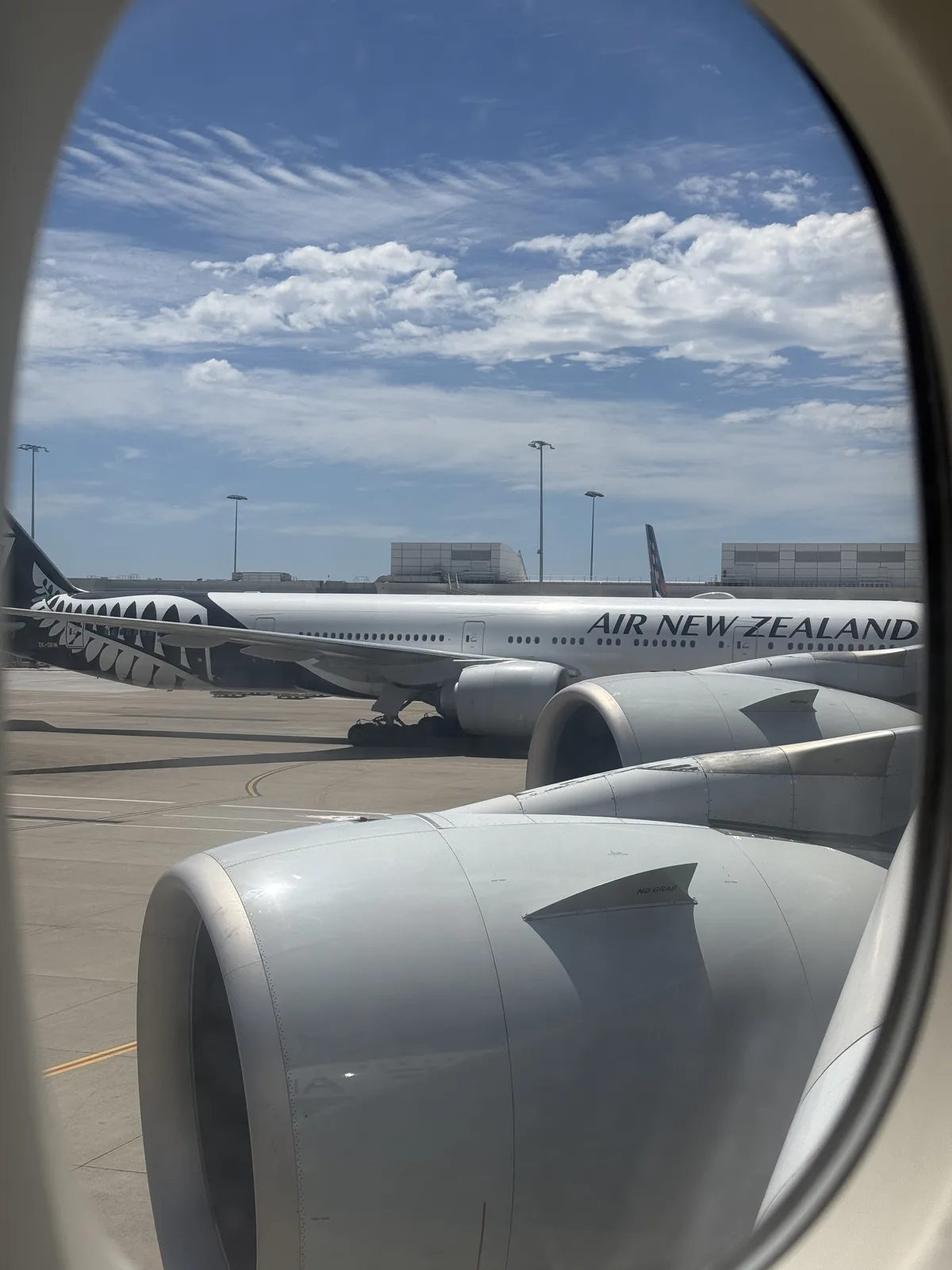
Pushback begins, and we’re off to Singapore.
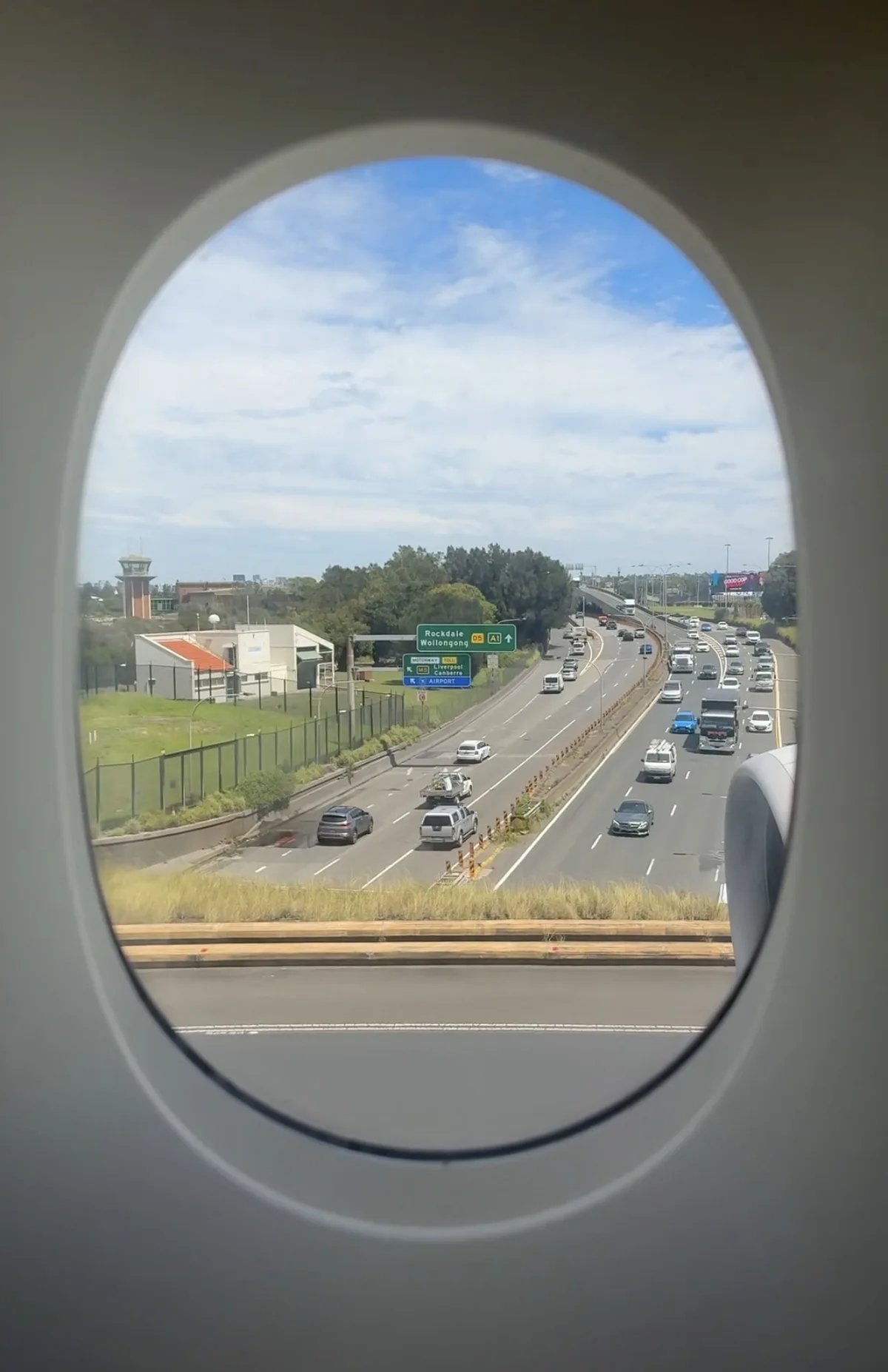
In-Flight Meals
The main reason Singapore Airlines is my favorite carrier? The food. Even in economy, the meals are genuinely excellent.
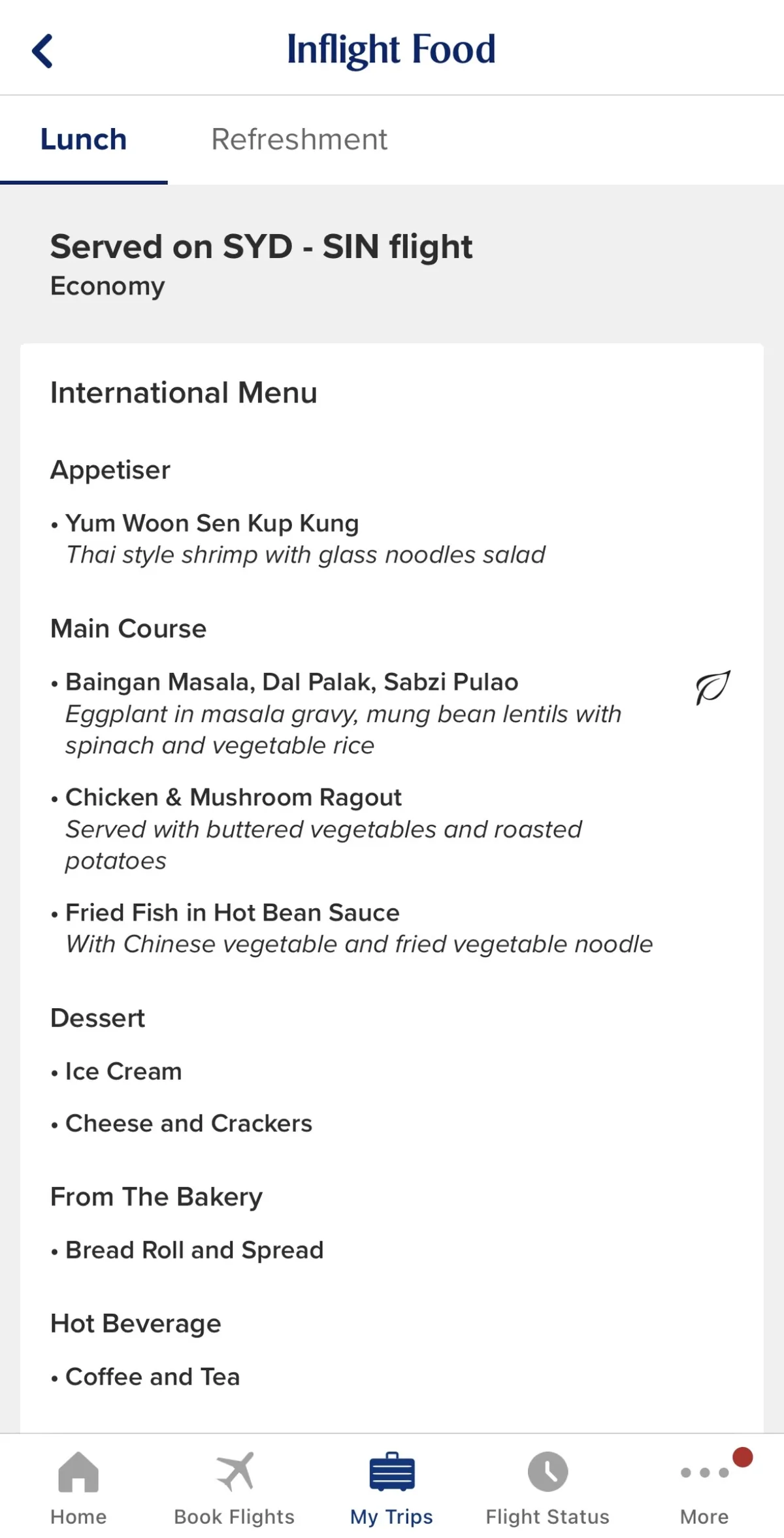
The Sydney–Singapore menu read almost like a fine dining course, though everything is of course served on a single tray.
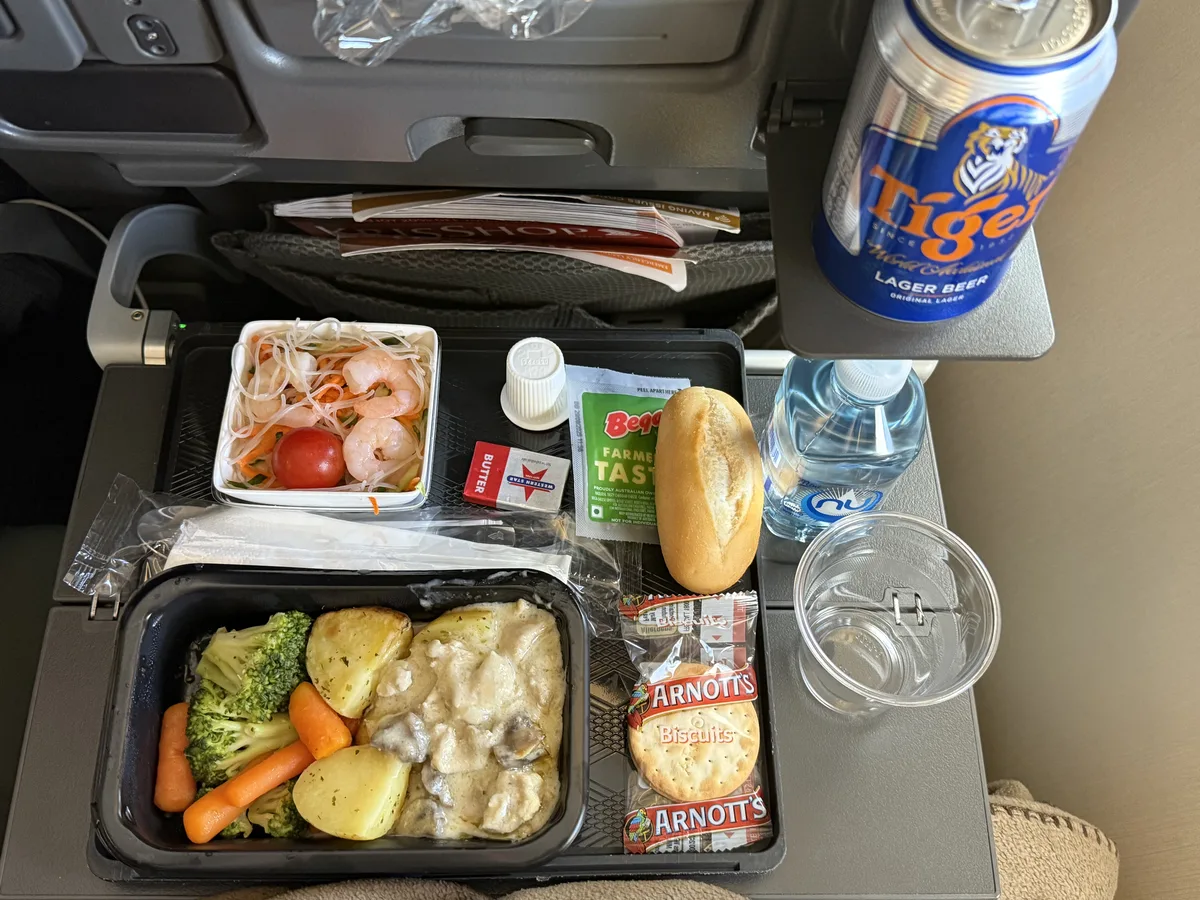
My meal. I always pair it with a Tiger Beer. The bread was outstanding — spread with butter and enjoyed alongside a coffee, it was pure happiness.
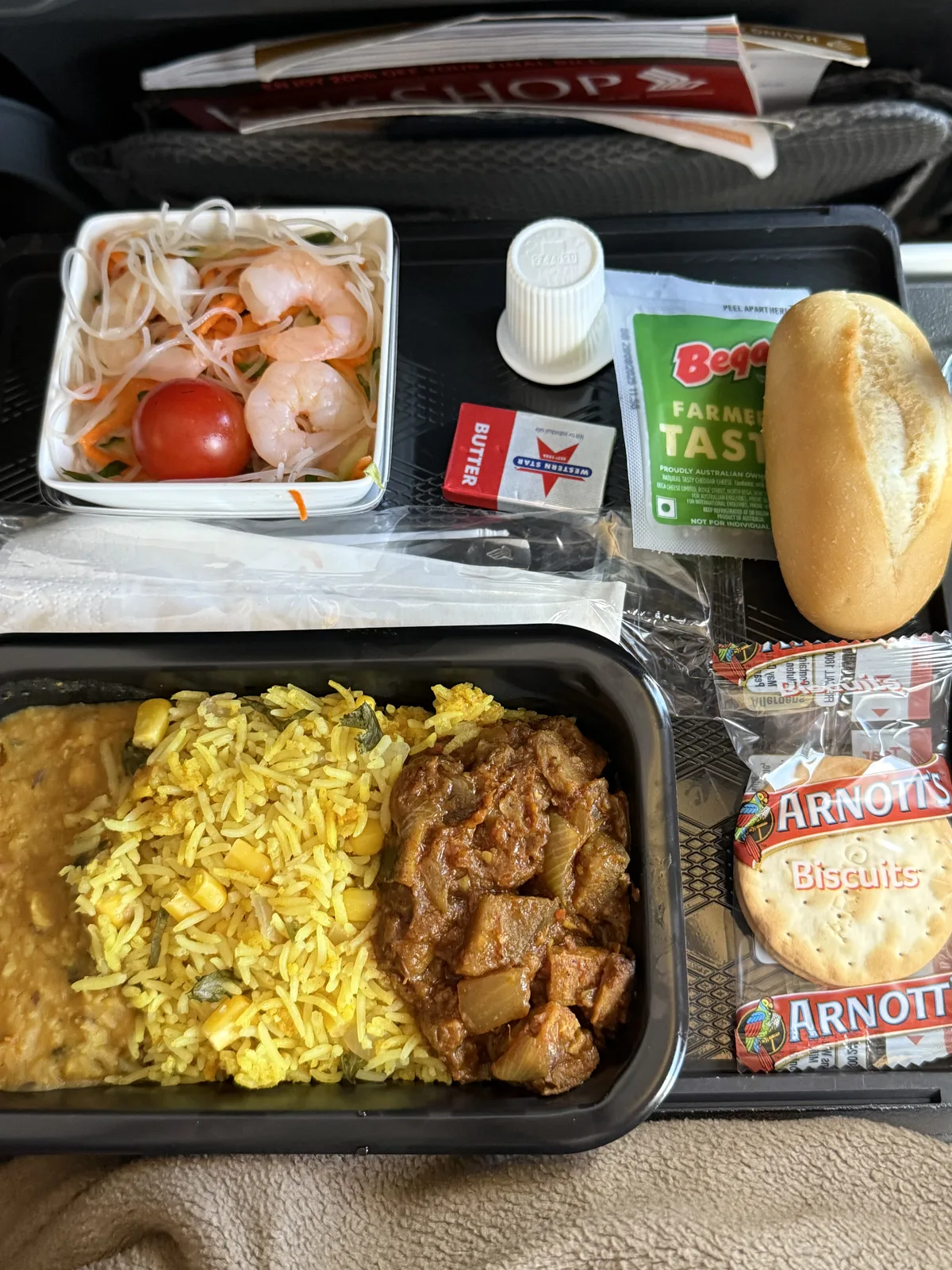
My mom’s meal. Well-seasoned, with tender, melt-in-your-mouth meat. Ice cream was distributed afterward — on flights departing from Incheon, I’ve been treated to Bungeo-ppang ice cream and Cornetto in the past.
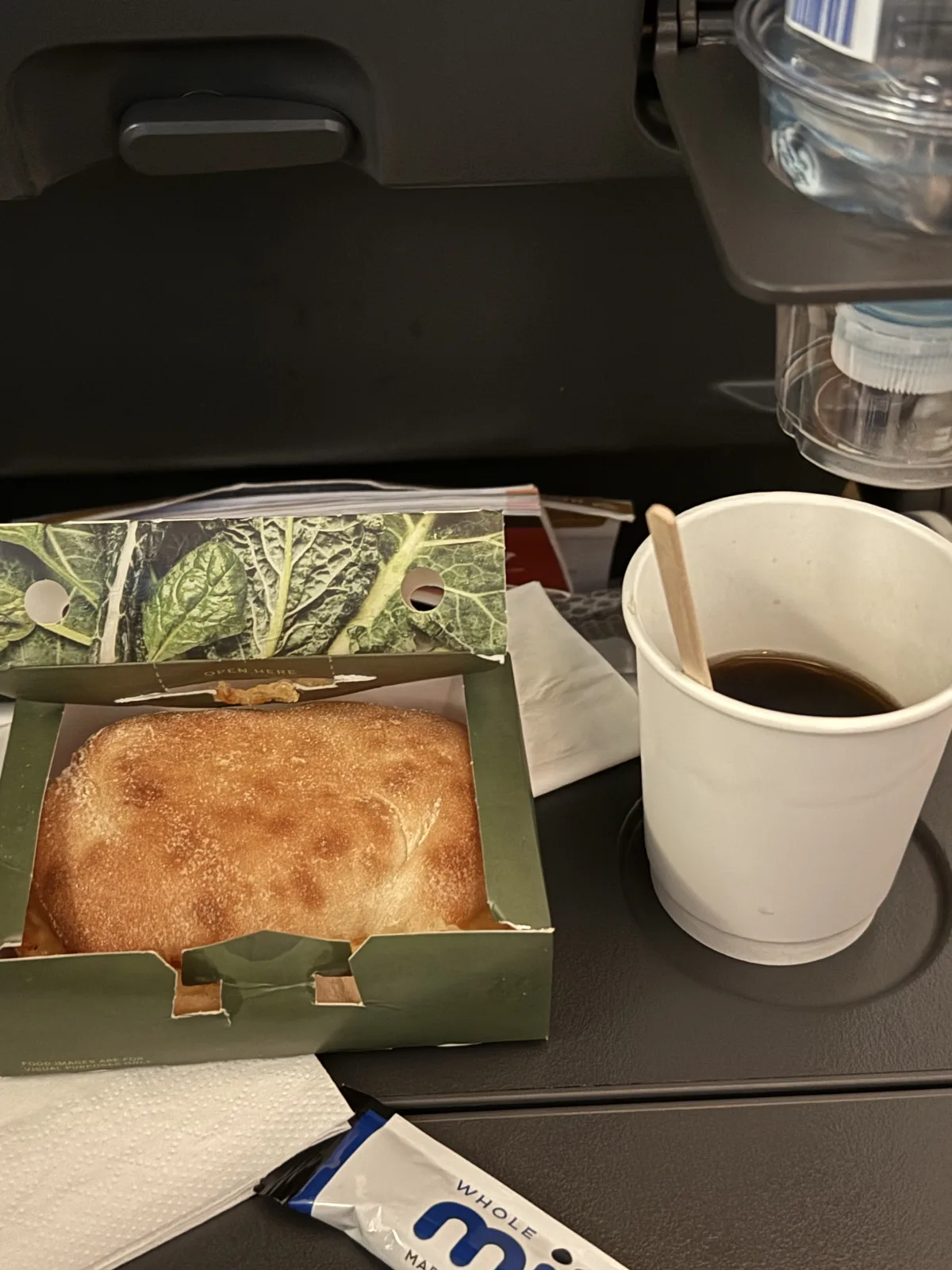
This is the hot snack served with coffee just before landing. Also delicious.
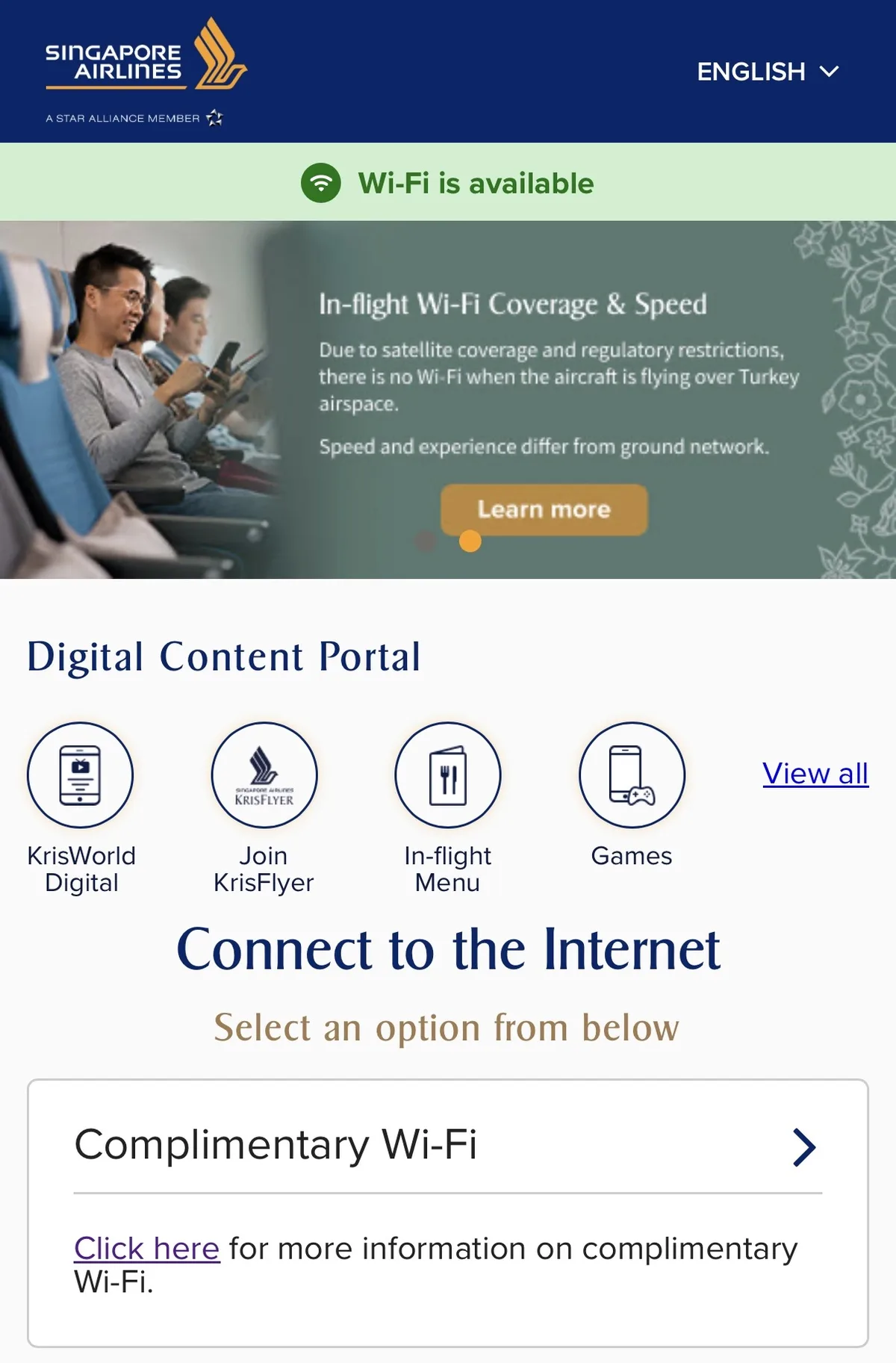
Another highlight of Singapore Airlines: complimentary Wi-Fi for all passengers. Enter your KrisFlyer membership number and you’re connected for the entire flight — a rare perk, especially given how many airlines still charge for it.
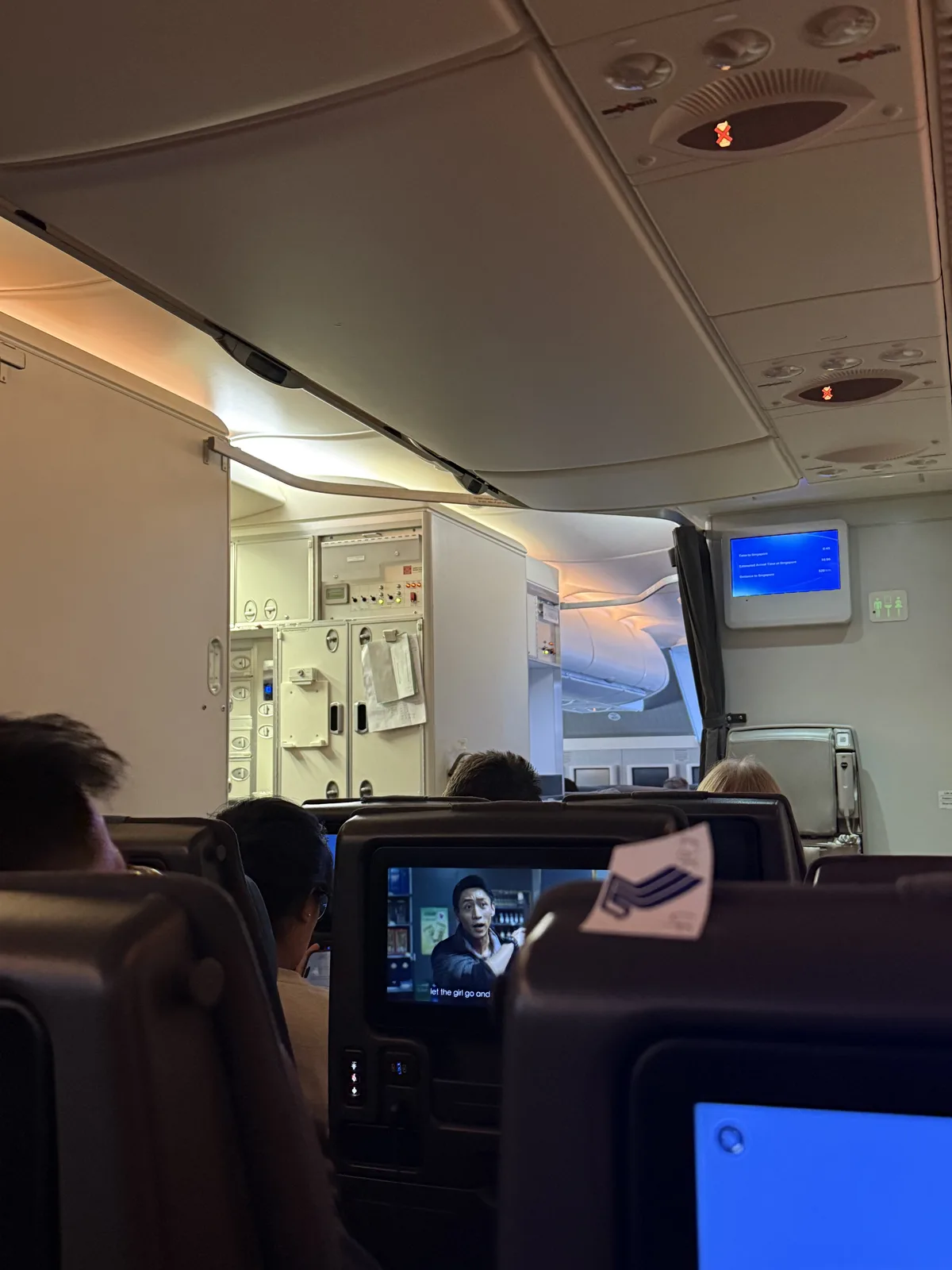
It was daylight for the entire flight, so I spent most of the 8 hours with the map open, watching the route unfold below.
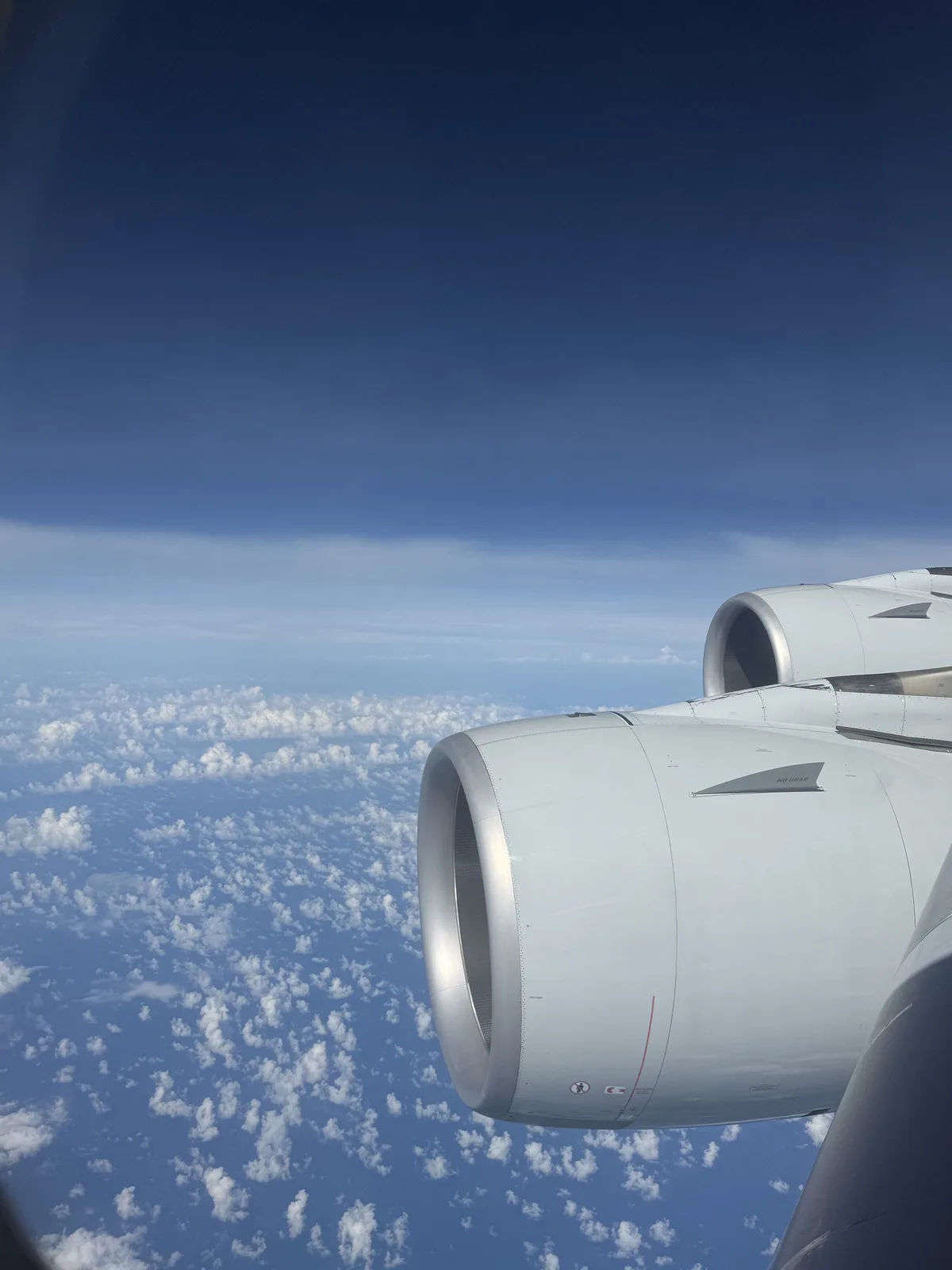
Over Indonesian airspace, the aircraft begins its descent. This was my second time flying the A380, and I’m once again struck by how stable it is — far less turbulence sensation than smaller aircraft, making even long-haul routes feel genuinely comfortable.
Landing — Singapore Changi Airport
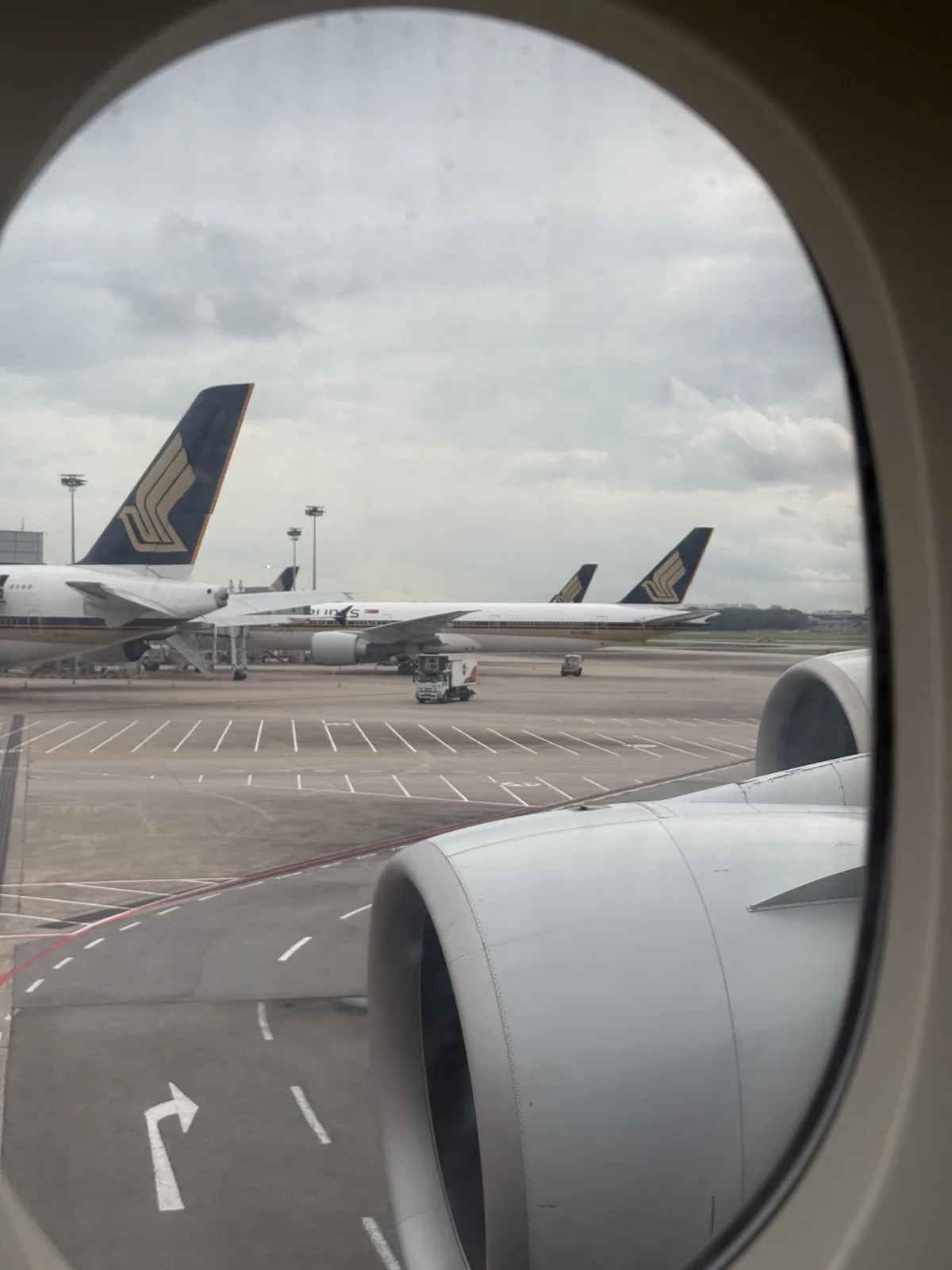
After nearly 9 hours of flight, we touched down at Singapore Changi Airport.
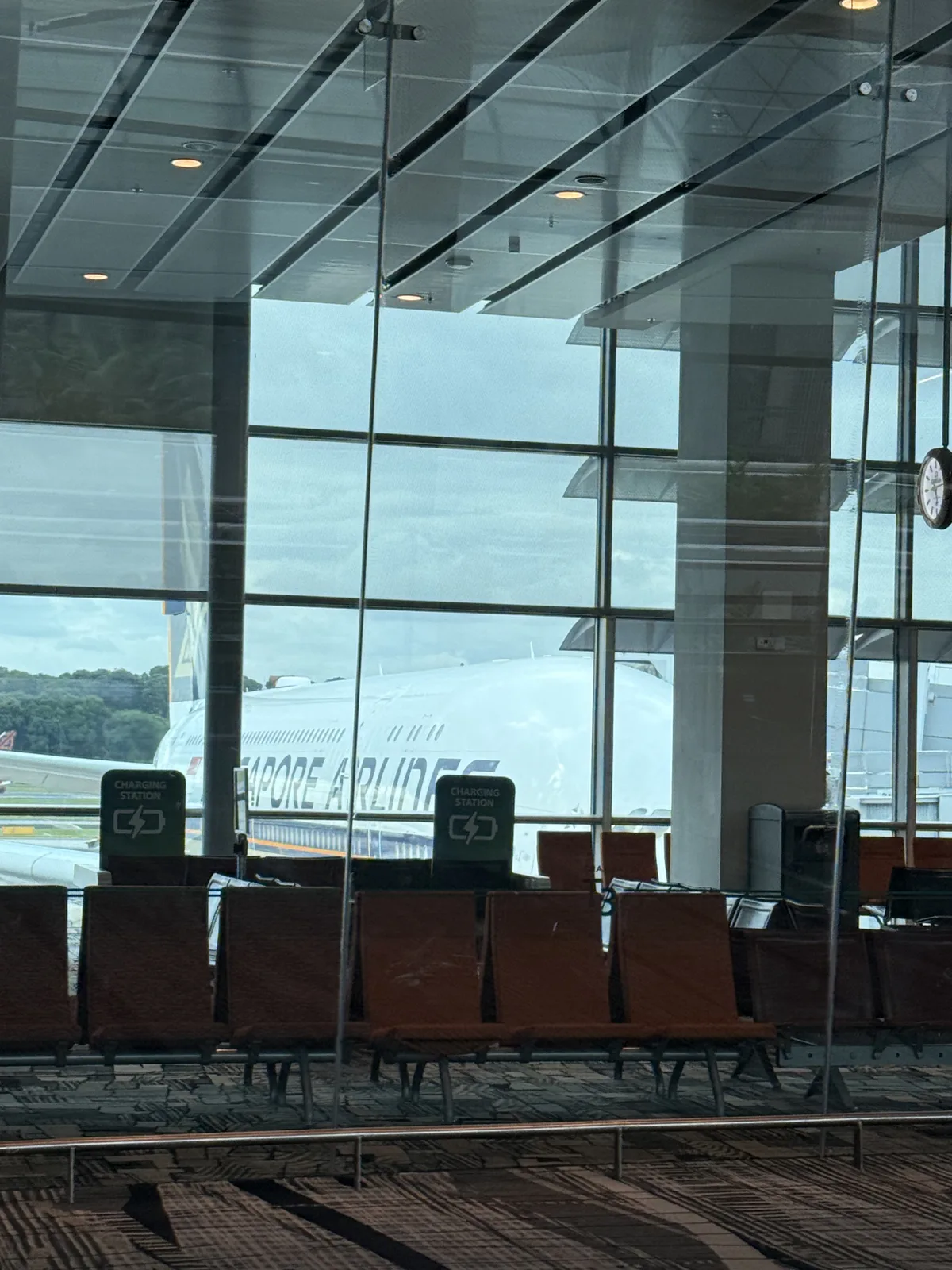
Changi is one of the most transit-friendly airports in the world. With over 8 hours until my Incheon connection, I planned to head out into the city for a bit before returning.
Changi excels in every area: efficient inter-terminal transit via automated people movers, large-scale automated immigration halls in every terminal, and security checks done at the gate rather than at immigration — making the entire transit flow remarkably smooth.
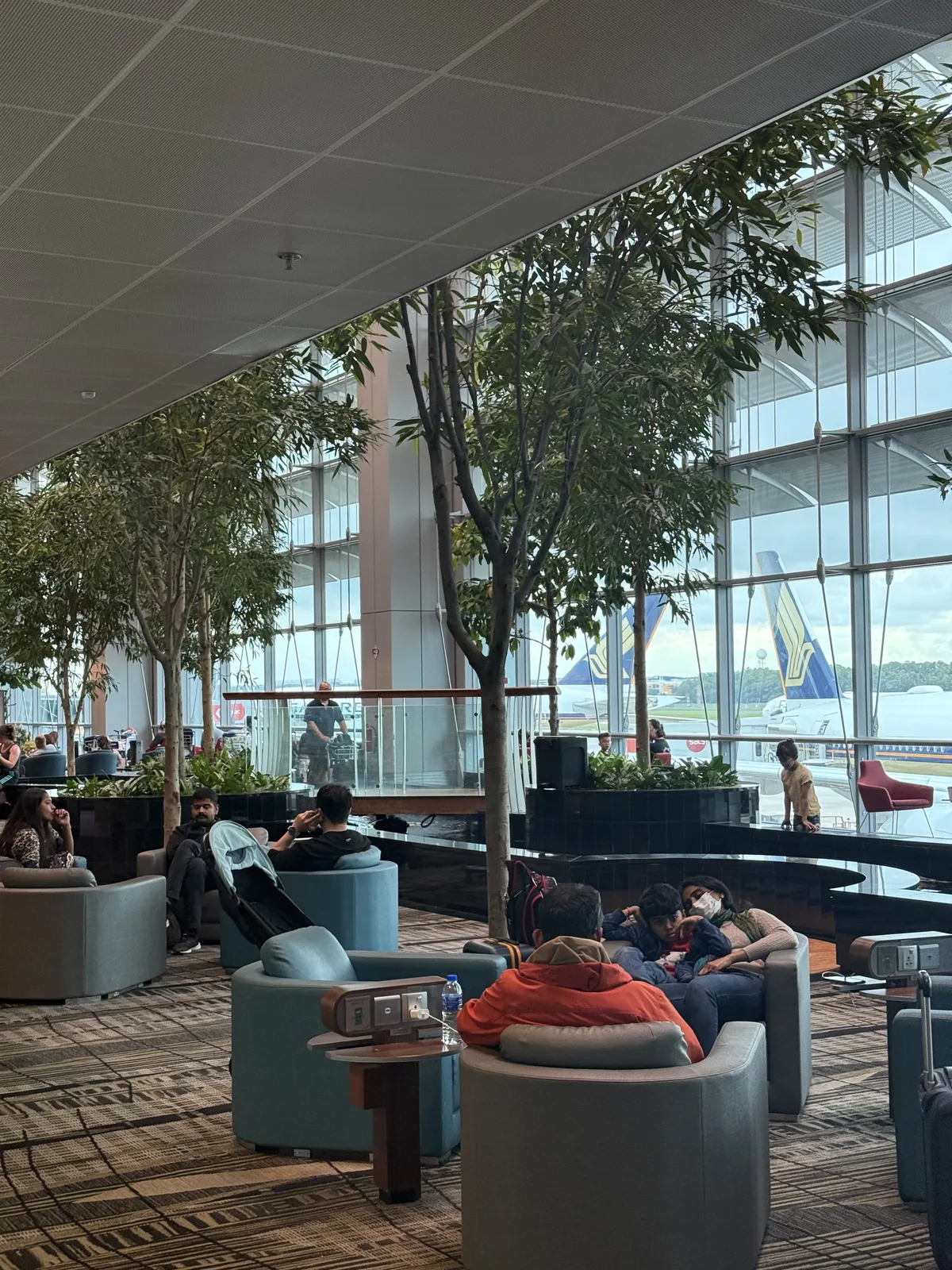
This is Terminal 3 — home to most Singapore Airlines departures and arrivals, as well as Star Alliance partner carriers. Compared to Terminal 2, the facilities are superior: high ceilings, an open, airy atmosphere, and generally a more spacious feel.
That concludes my Singapore Airlines SQ232 review.
← Back to list