 Korean
Korean Air KE2101 GMP–HND Economy Review
Hi, today I’m sharing my review of Korean Air flight KE2101 from Gimpo International Airport to Tokyo Haneda International Airport.
Gimpo International Airport — International Terminal
Before Incheon International Airport opened, Gimpo was Korea’s main gateway. After Incheon launched, most international routes shifted there. Today, Gimpo serves only a limited number of short-haul international destinations within a set distance.
This was my first time using the Gimpo international terminal.
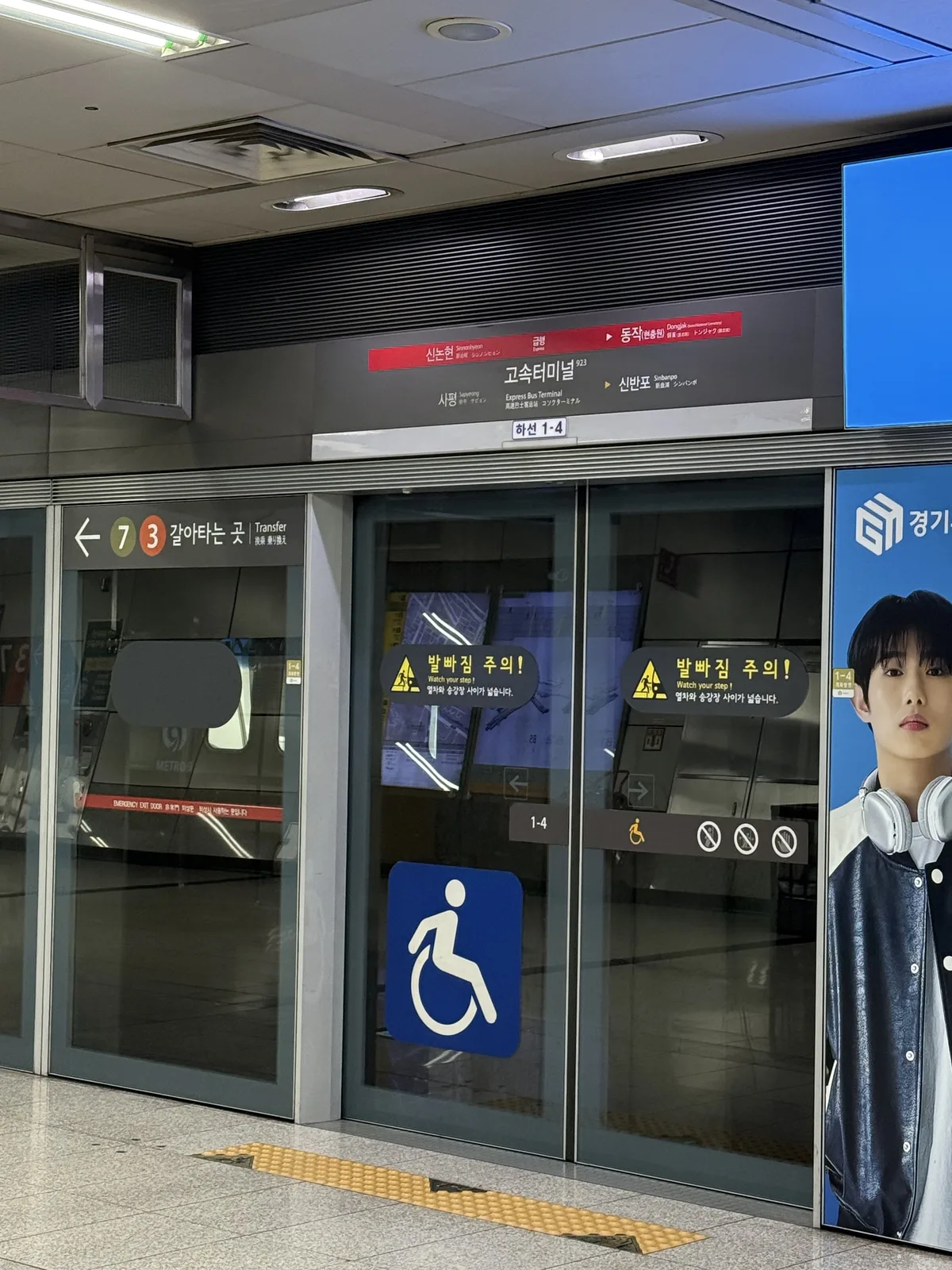
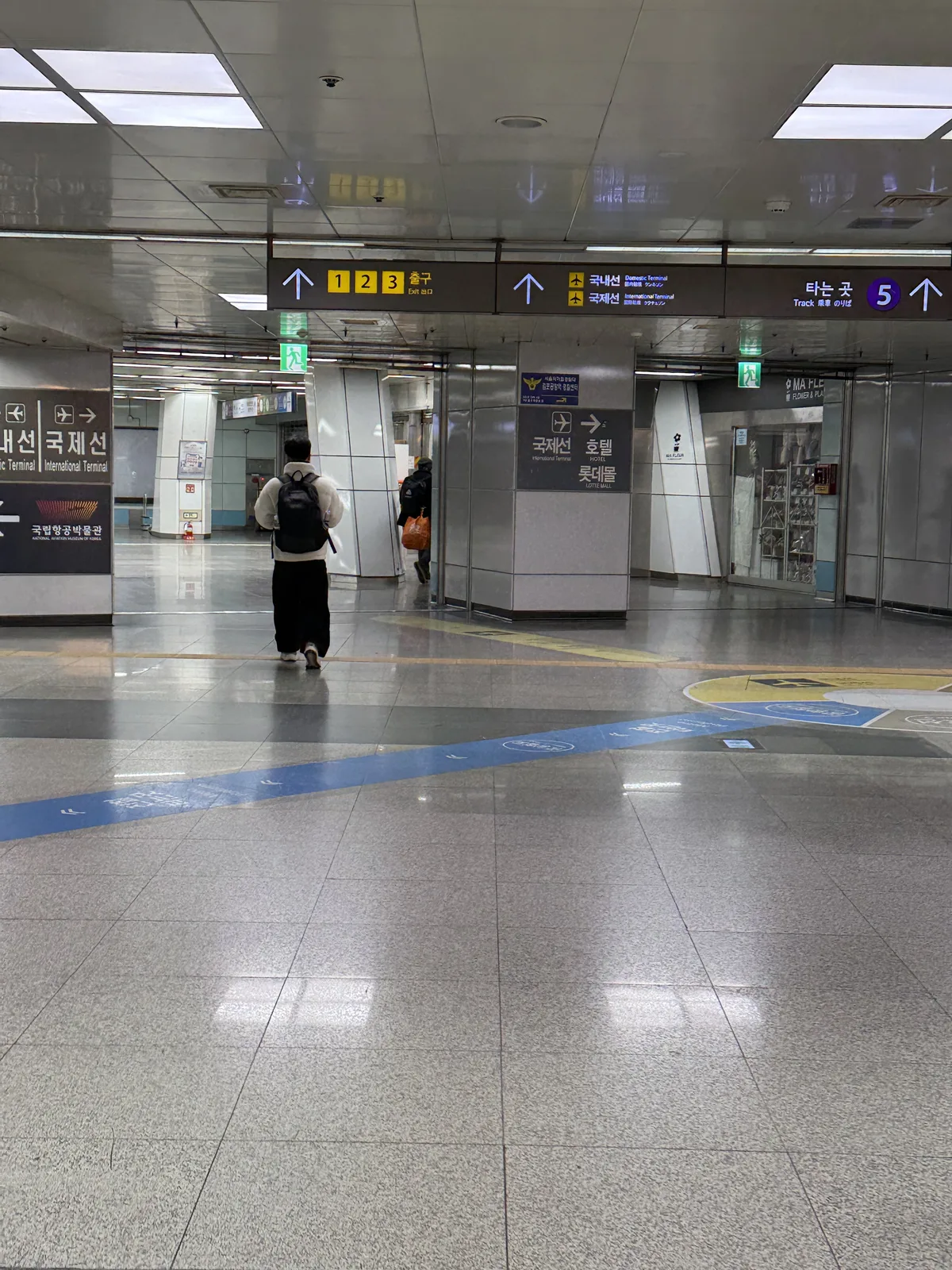
I took the Line 9 express train to Gimpo Airport station and followed the signs to the international terminal — a terminal I’d never used before, always having gone to the domestic side.
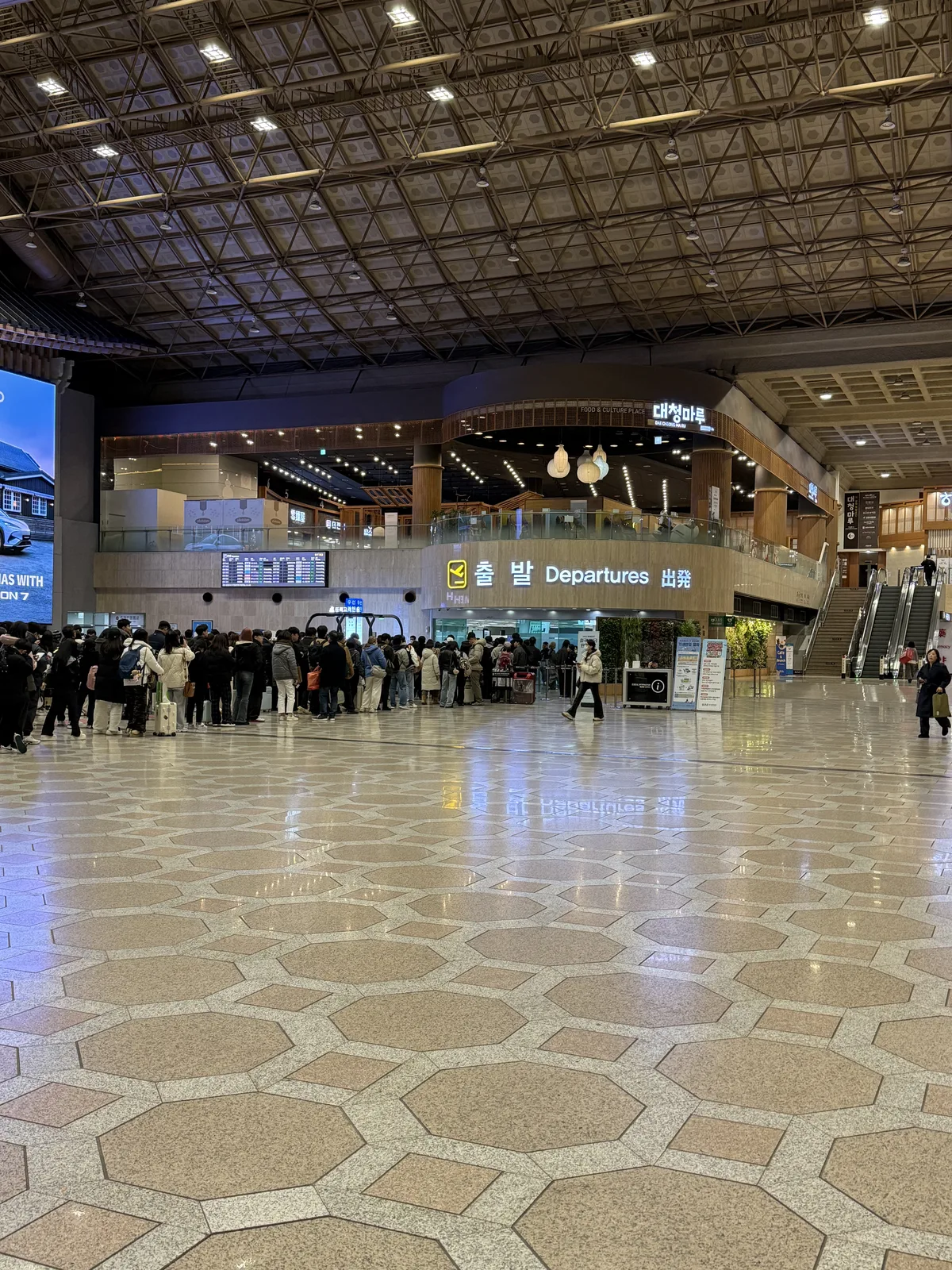
After checking my bag at the Korean Air counter I headed straight to the departure gates.
KE2101 was scheduled to depart at 09:00 and arrive at Tokyo Haneda at 11:05.
Because most of Gimpo’s international flights are concentrated in the morning, the airport was quite busy despite it being a Monday. The security queue took around 10–15 minutes, so arriving with plenty of extra time is recommended.
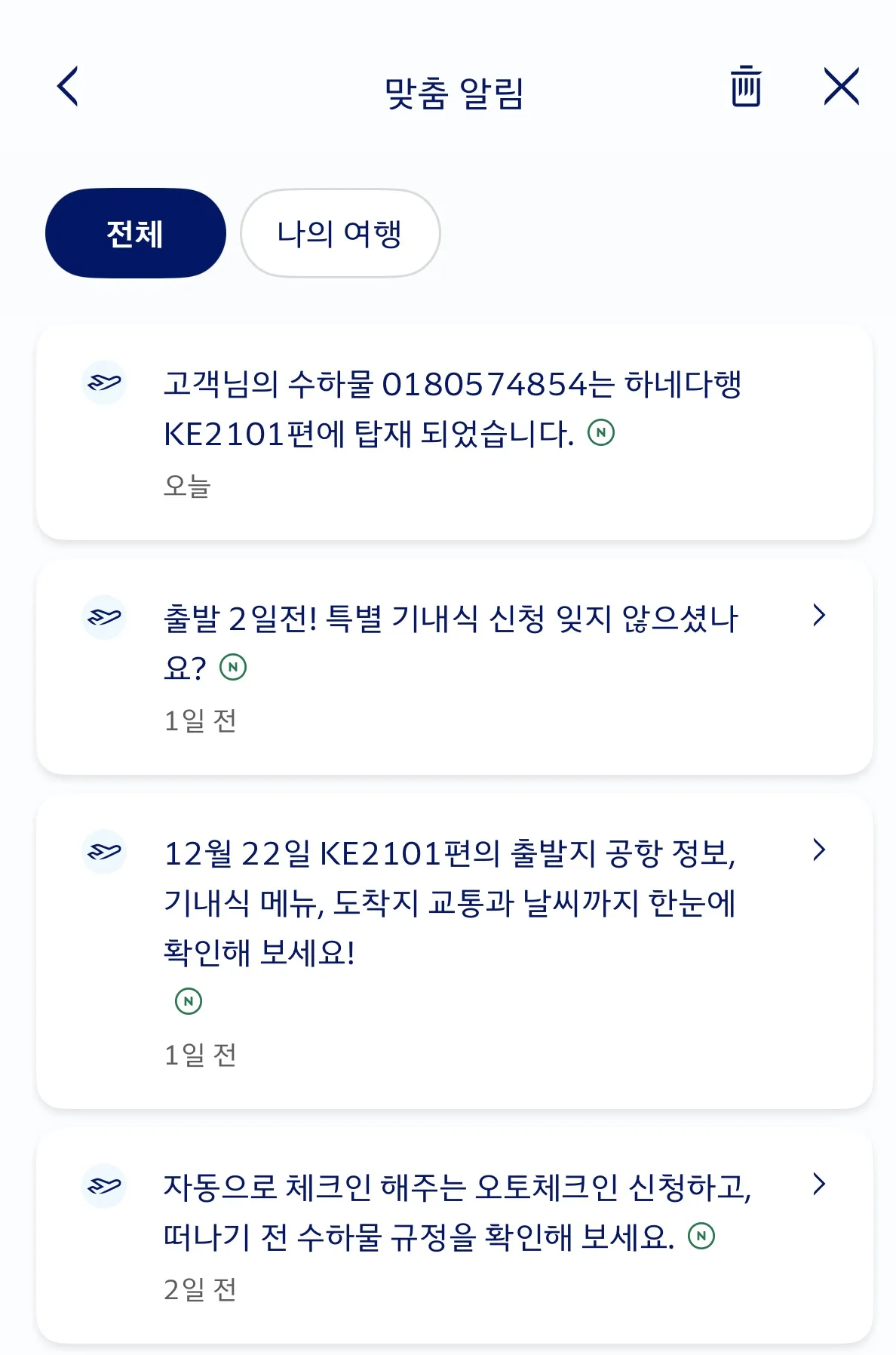
I enrolled in the biometric fast-track program, which helped me get through a bit faster. Once through security, I received a baggage-loaded notification on my phone.
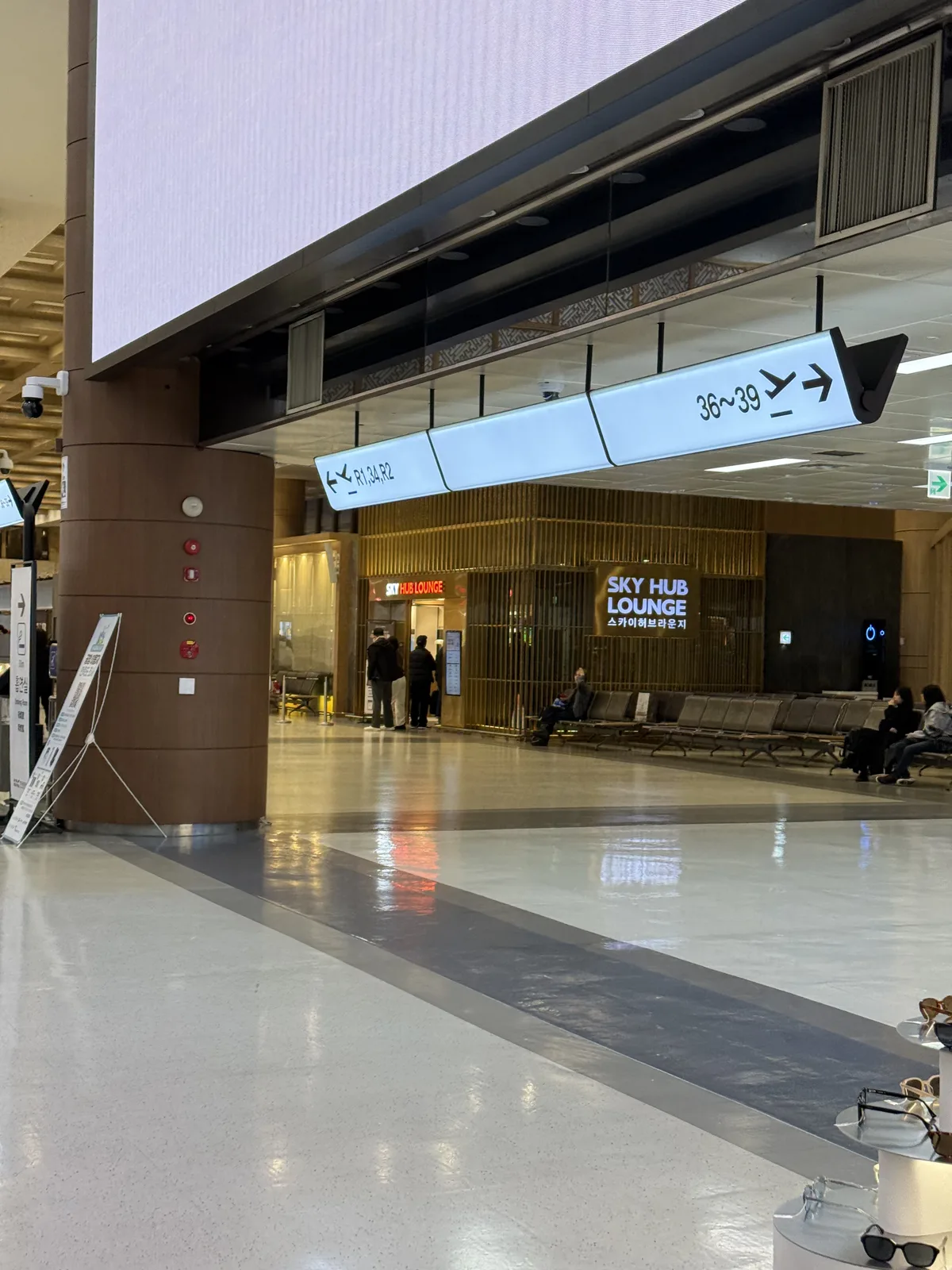
Right past security is Gimpo’s only PP-card lounge — the SkyHub. You can read my full lounge review here:
Gimpo Airport SkyHub Lounge — Location, Menu & Free Access Guide
Boarding KE2101
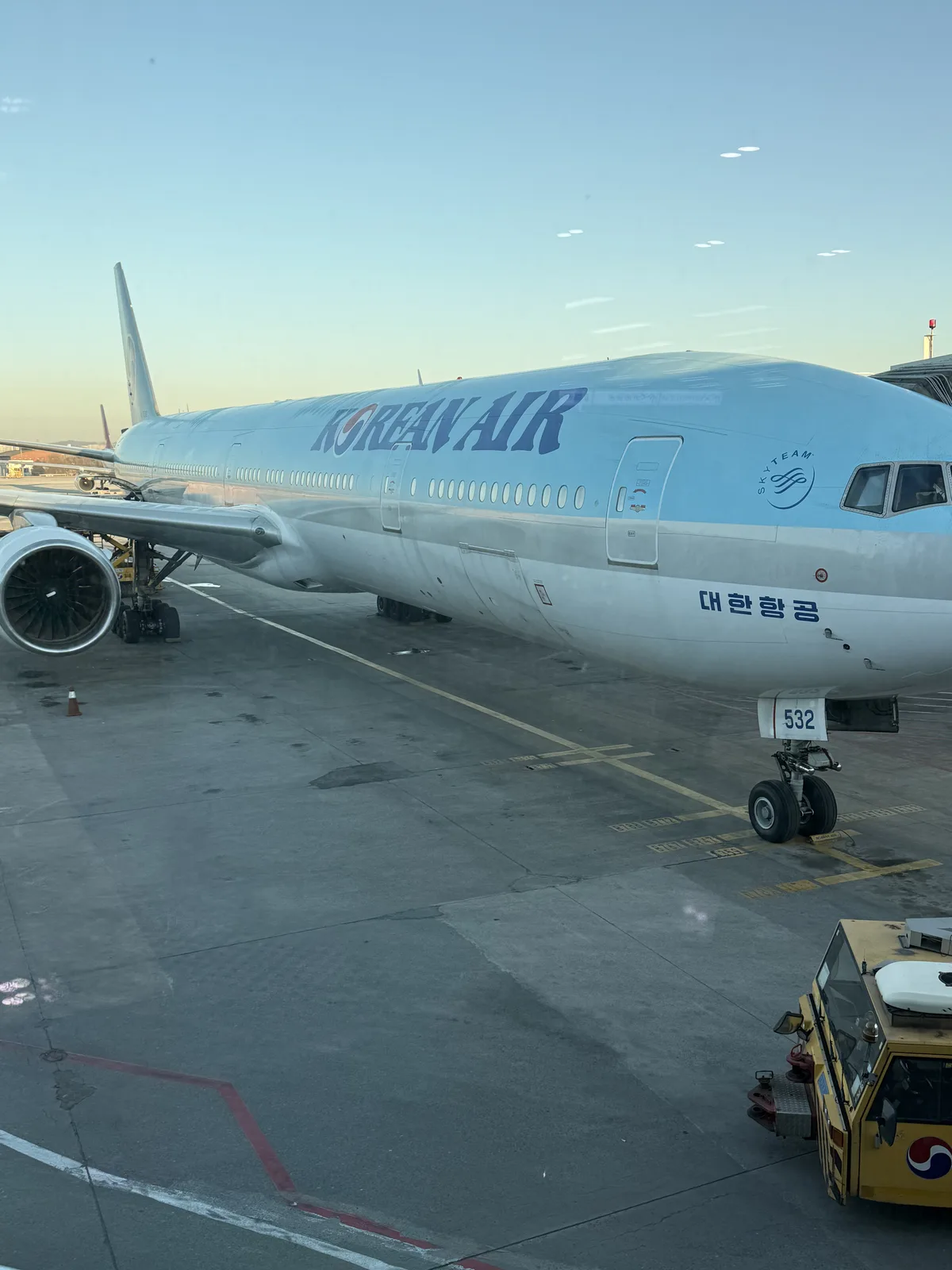
While waiting at the gate, I spotted my aircraft — a Korean Air Boeing 777-300 — pulling in.
The GMP–HND route normally operates with an A330, recently switching to a B787-10. But apparently due to high year-end demand, a B777-300 was substituted starting the day before my flight.
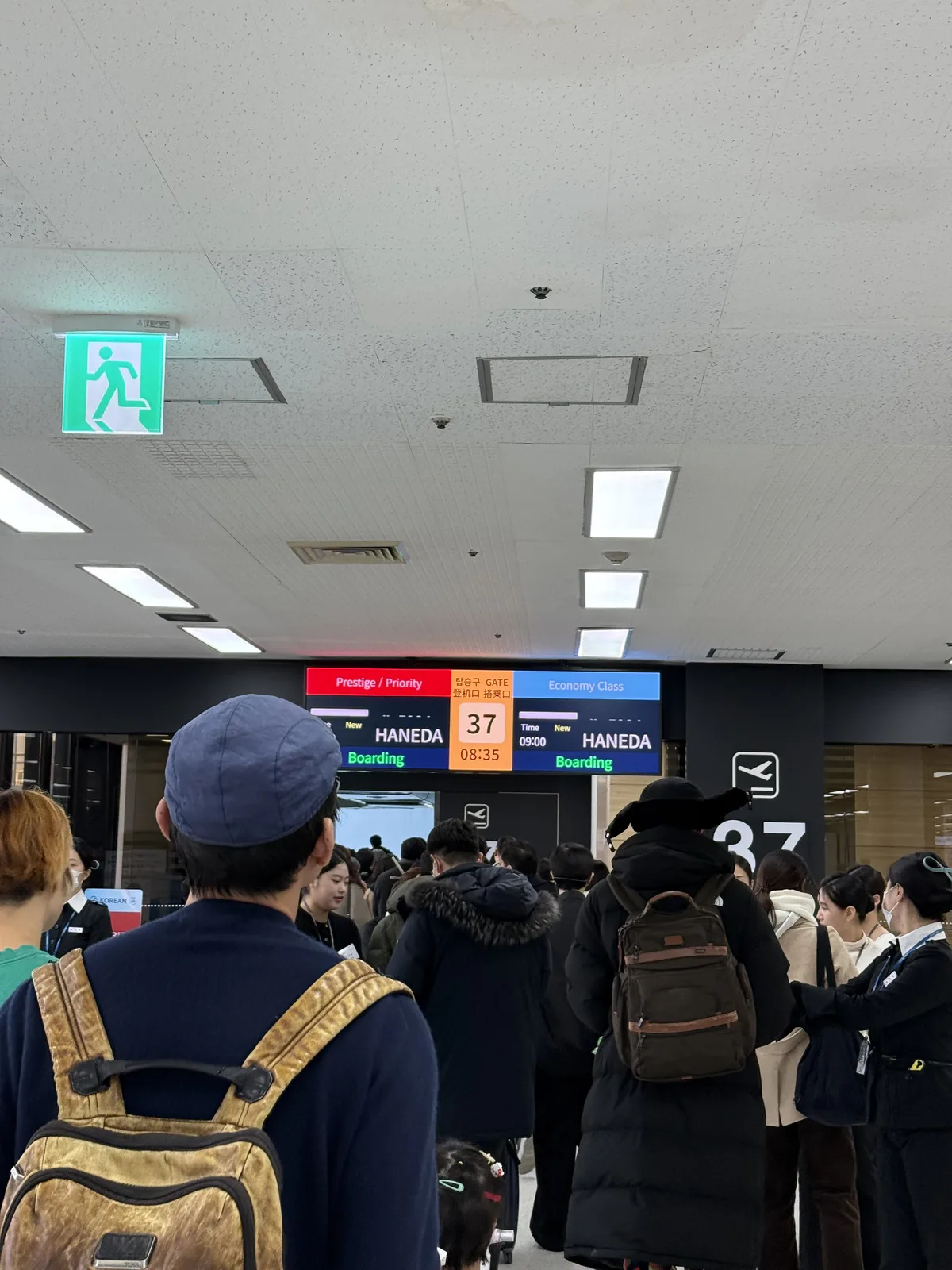
Boarding began and I made my way on board. It was visibly busy, likely because of year-end travel demand.
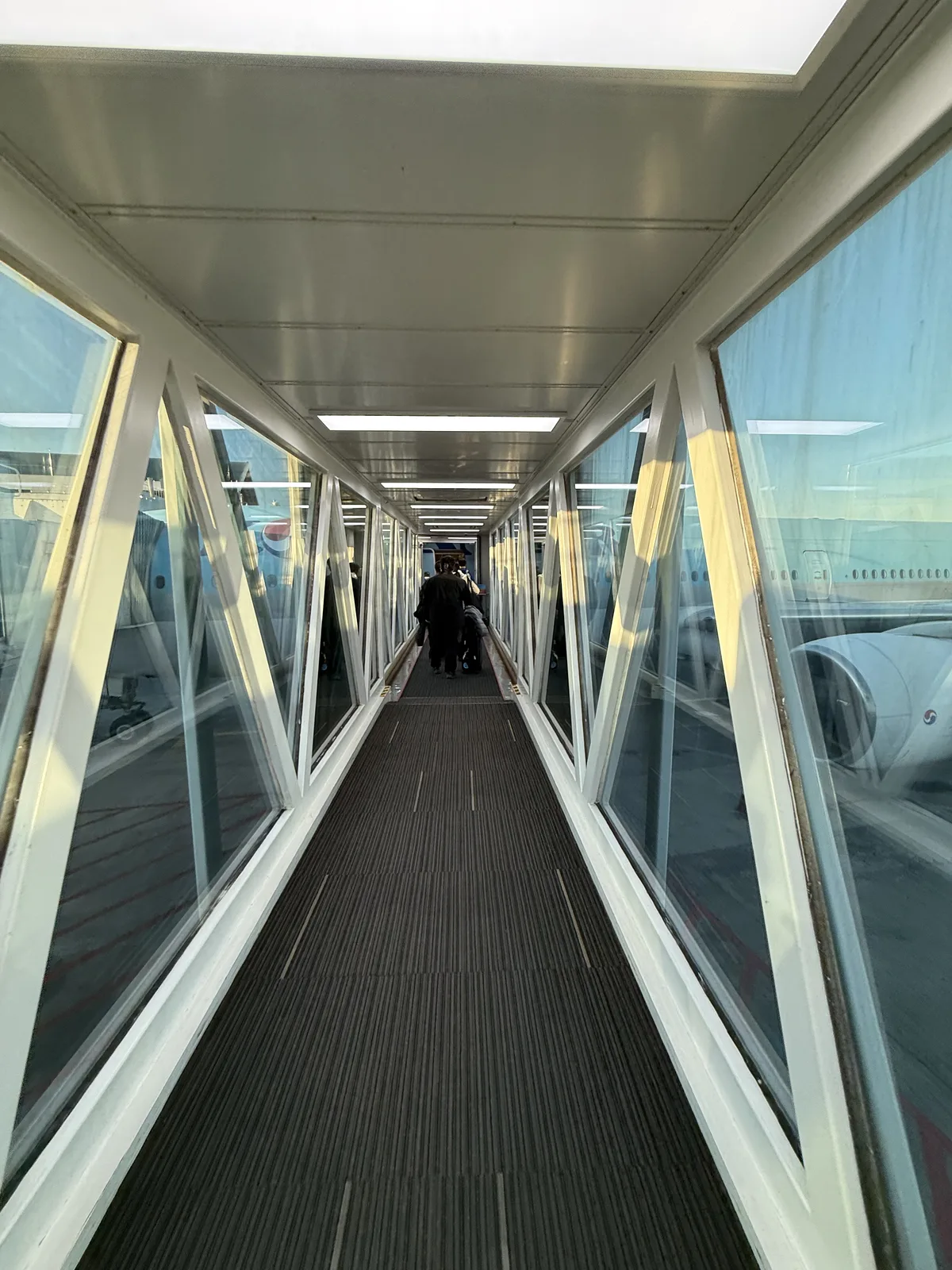
After settling in I realized I hadn’t registered for Visit Japan Web, so I quickly completed it on board.
How to Register on Visit Japan Web
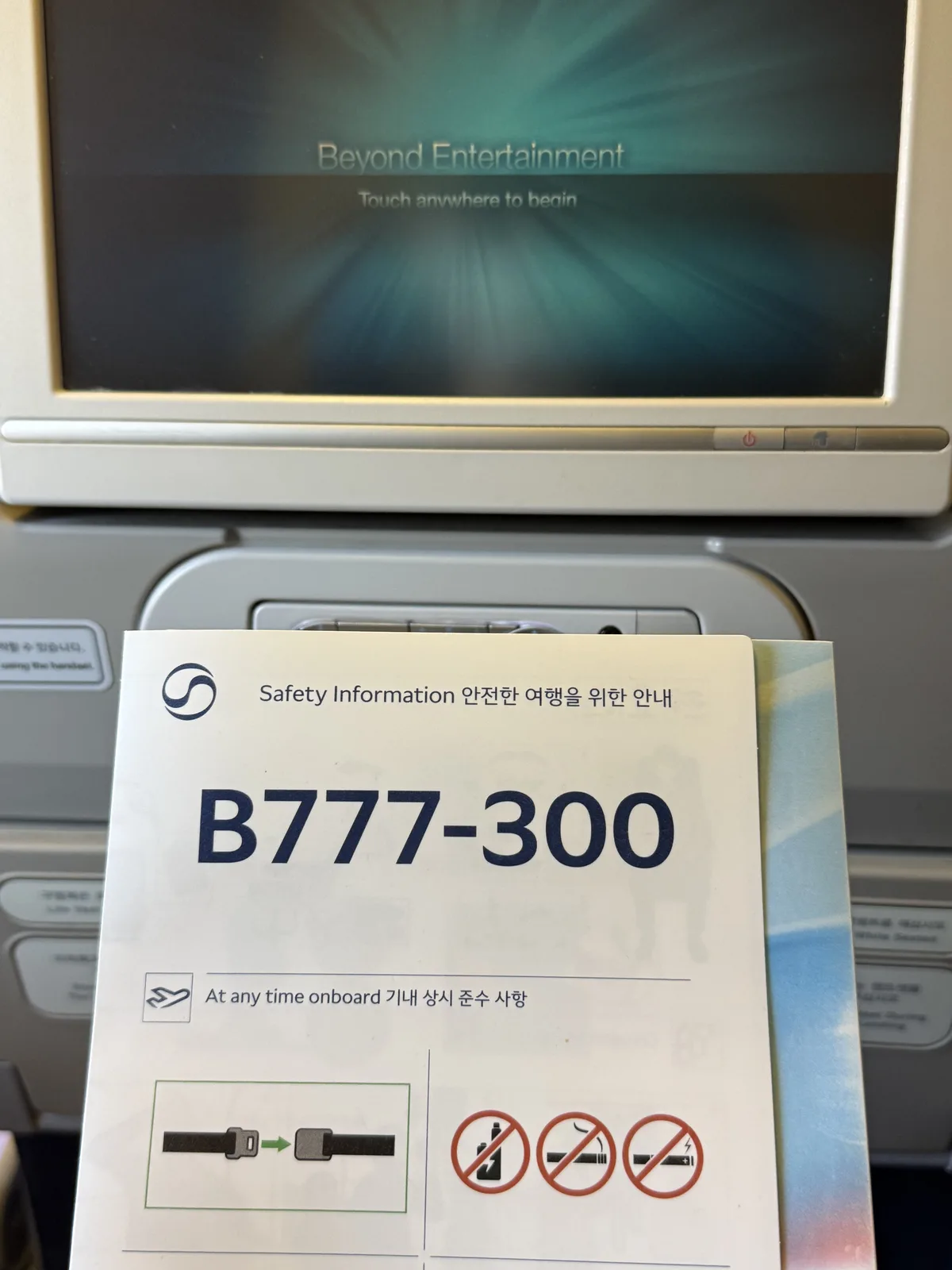
The aircraft is a Boeing 777-300 (Non-ER), registration HL7532, a 26-year-old bird. I was hoping to finally experience Korean Air’s new livery on a newer airframe, but the equipment swap dashed those hopes.
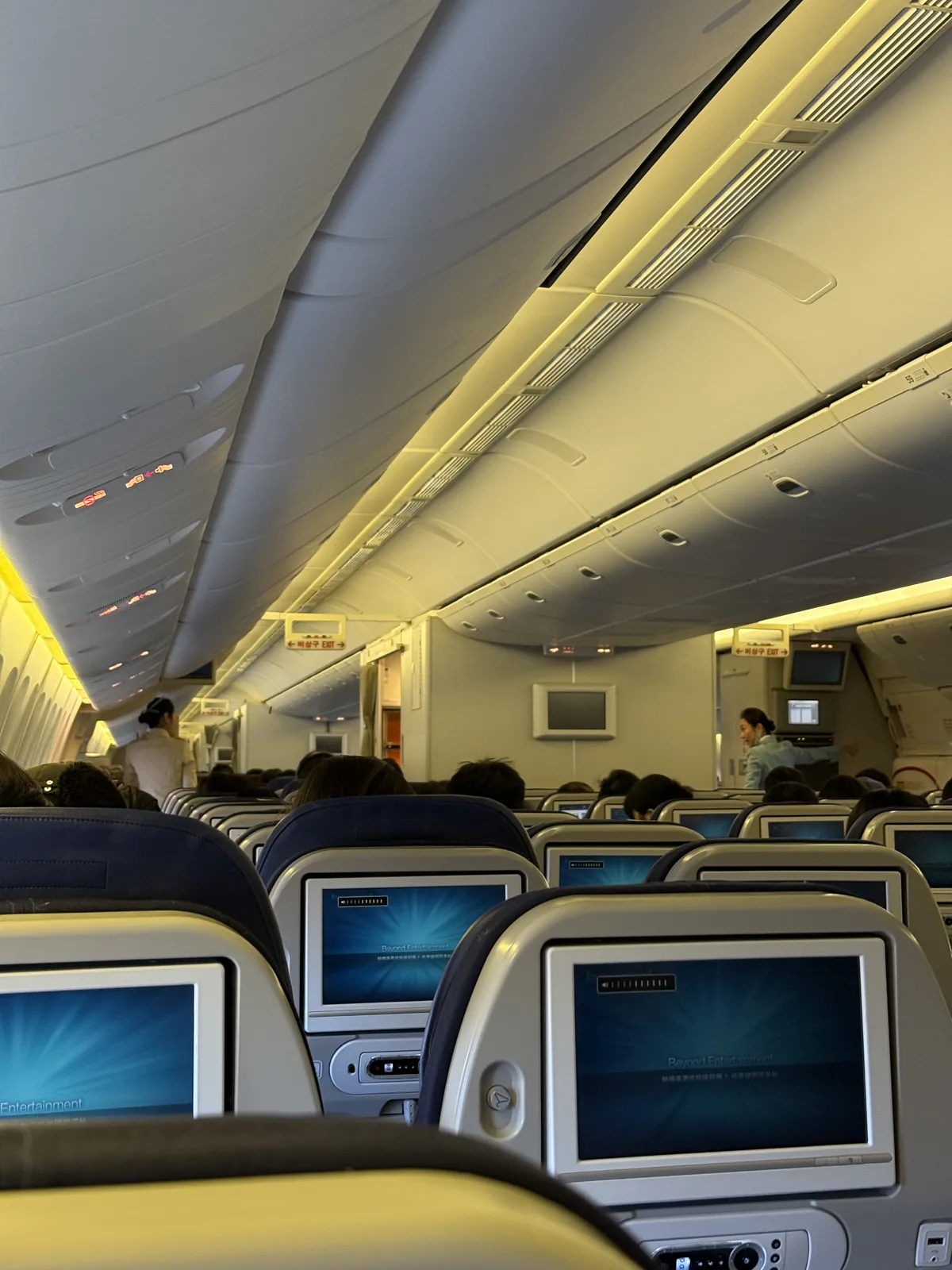
The cabin layout is 3-3-3 with 338 seats — the most seats of any Korean Air 777 variant. I sat in 63A, one of the two-seat rows at the very back.
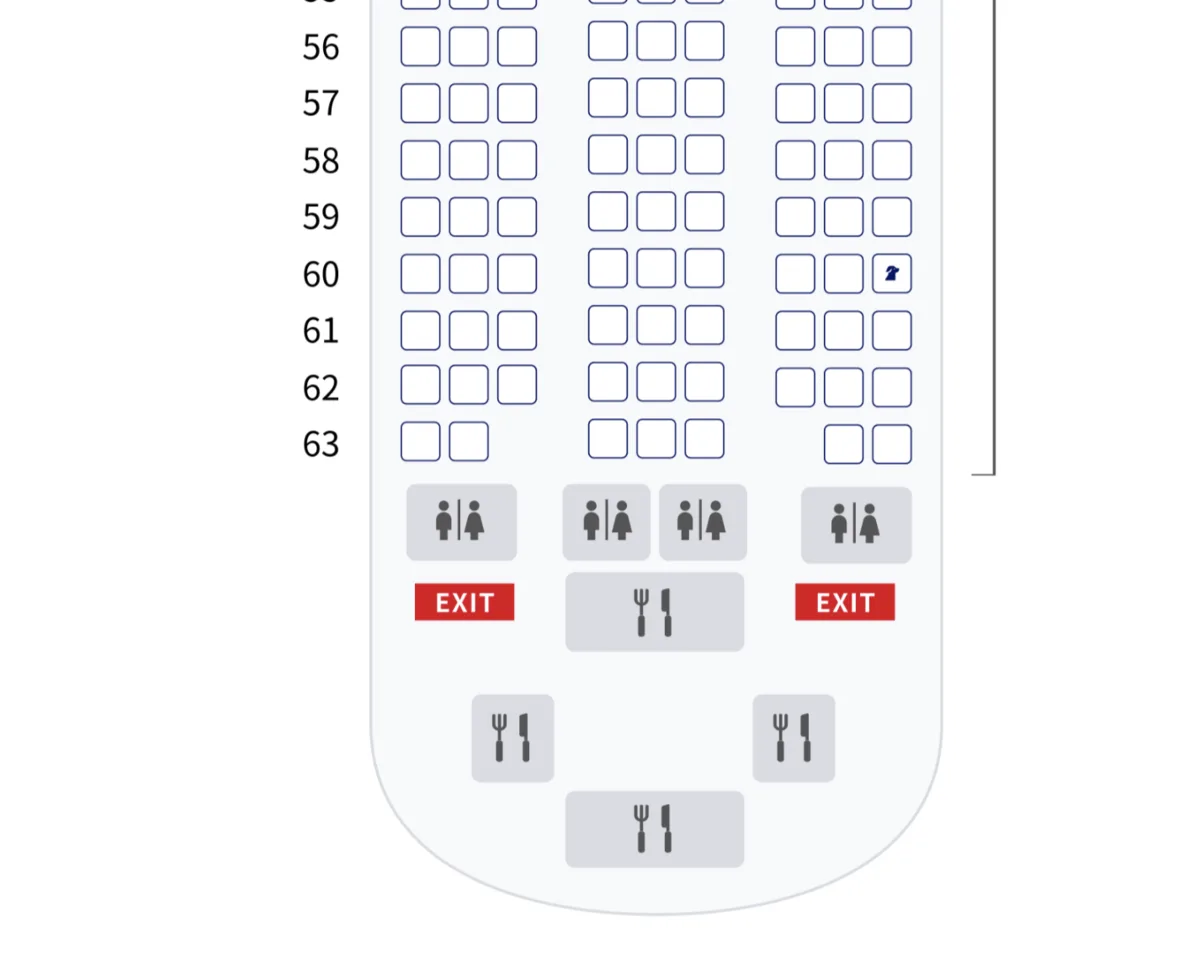
Source: Korean Air, B777-300 seat map
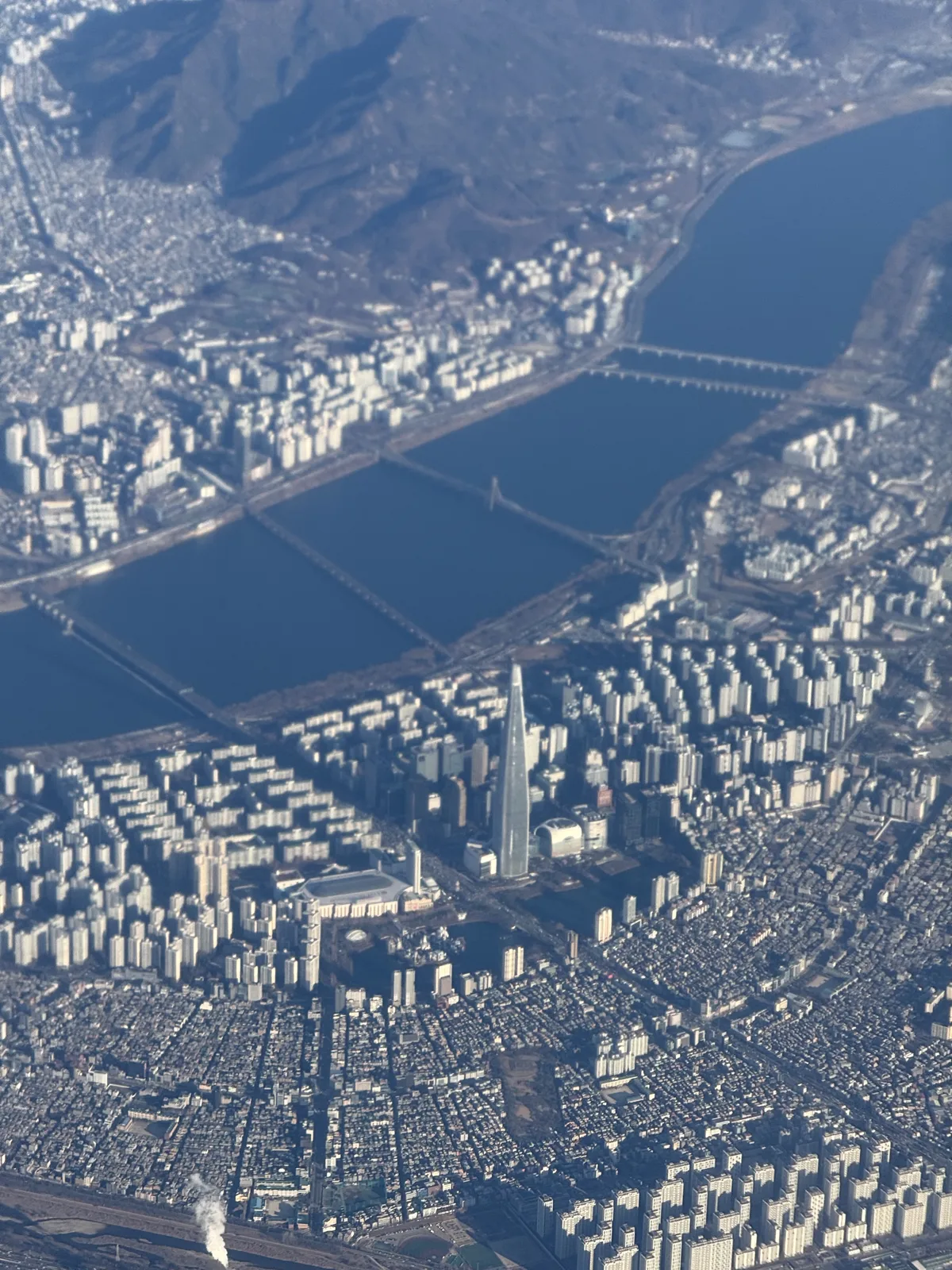
After takeoff, the aircraft climbed eastward following the Han River.
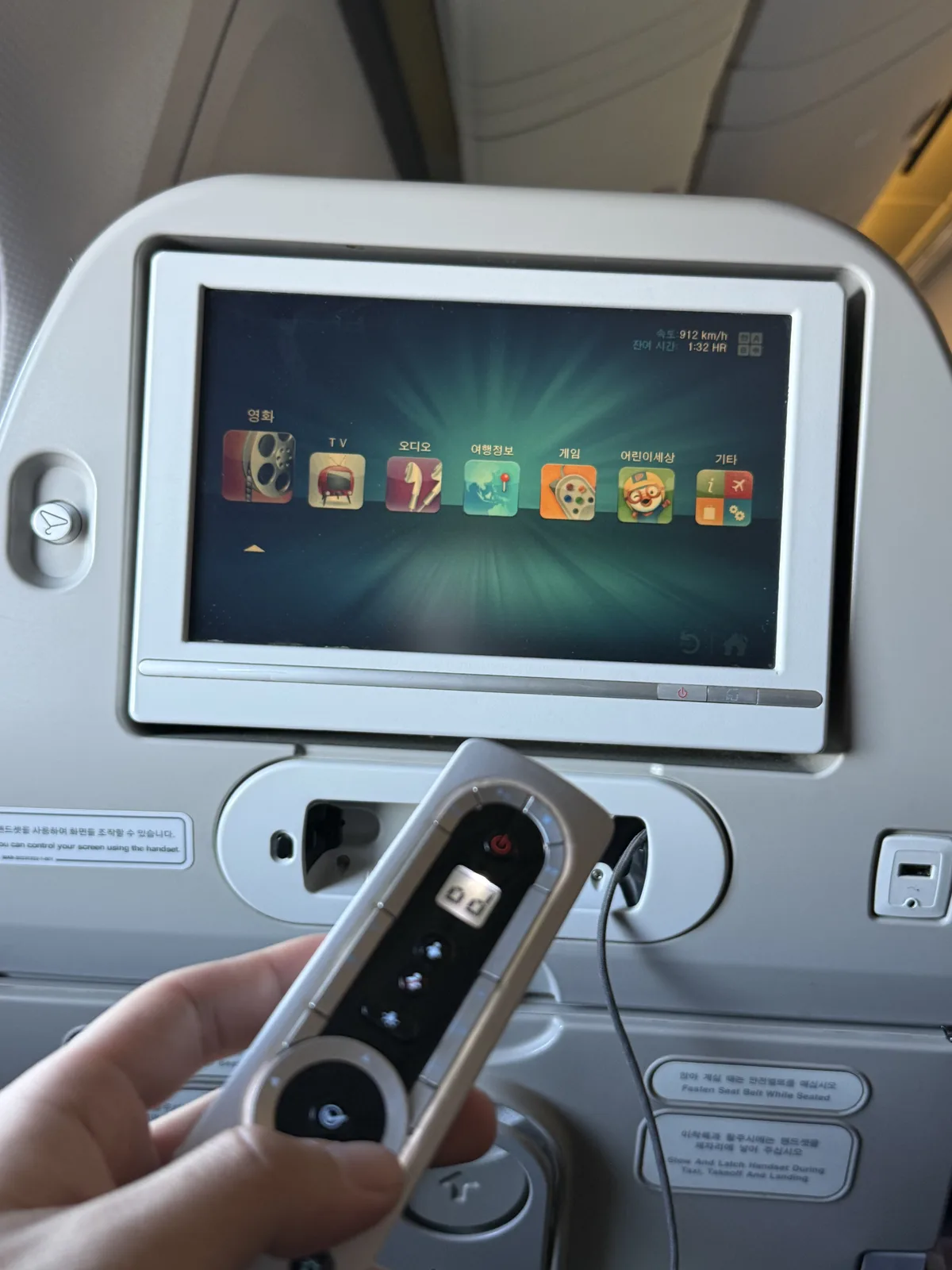
I hadn’t seen an IFE system and remote like this in a long time — picture quality and touchscreen response both showing their age, but with not many years left in service, I gave it a nostalgic poke around.
In-Flight Meal
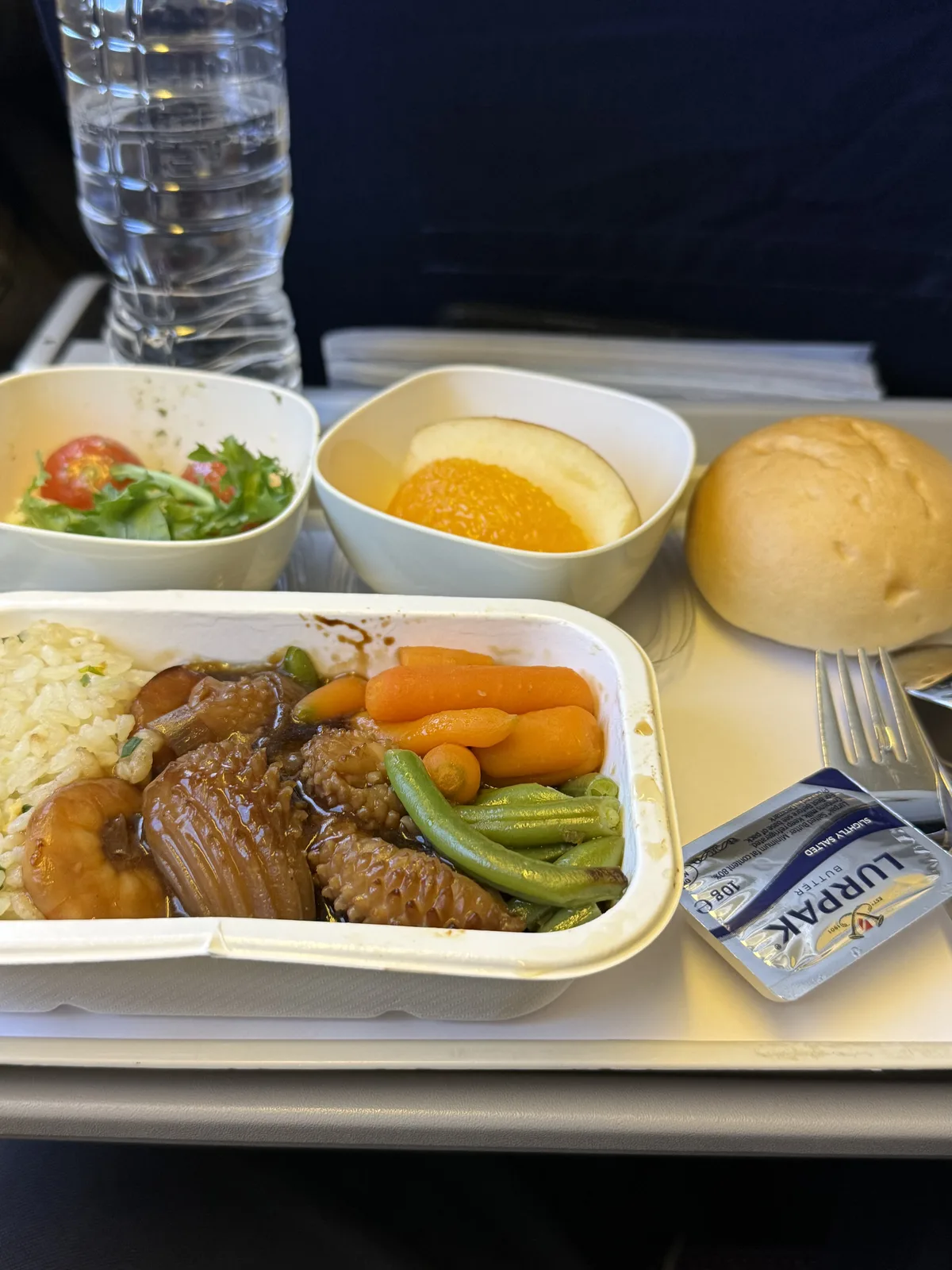
I’ve been flying budget carriers so much lately that I completely forgot full-service airlines serve meals on Japan routes. It’s a single-menu option, but given the high business-travel demand on this route, the meal quality was surprisingly solid. (The dinner roll, however, was not great.)

I also ordered Korean Air’s famous guava juice. I’ve seen posts about it being sold in Japan somewhere, but I’ve yet to spot it myself.
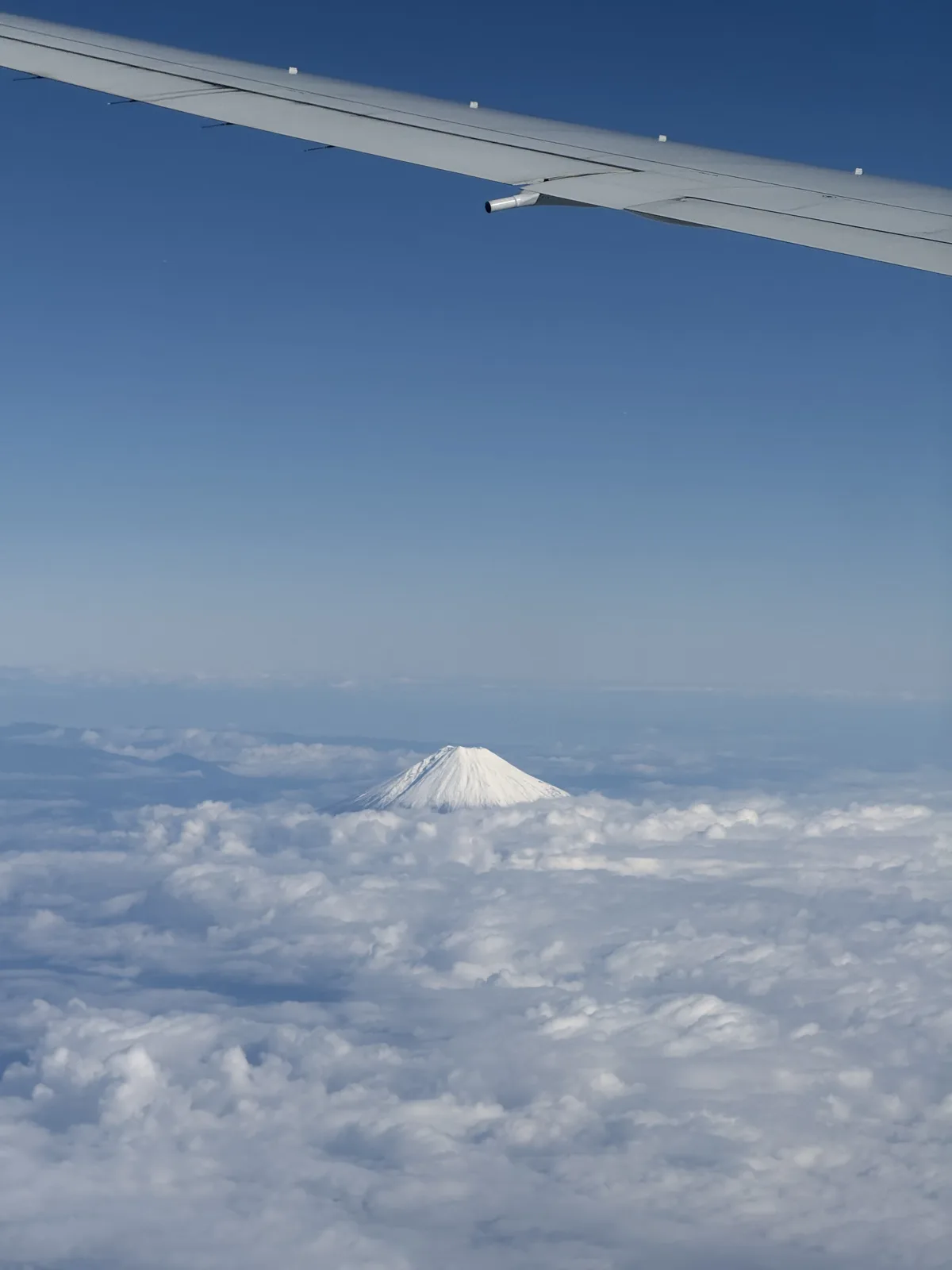
Sitting on the left side (A-seat) on flights to Haneda means you can catch a view of Mt. Fuji during approach. Snow-capped and rising high above the clouds, it’s easily visible as the plane descends near the Shizuoka area.
Landing — Tokyo Haneda International Airport
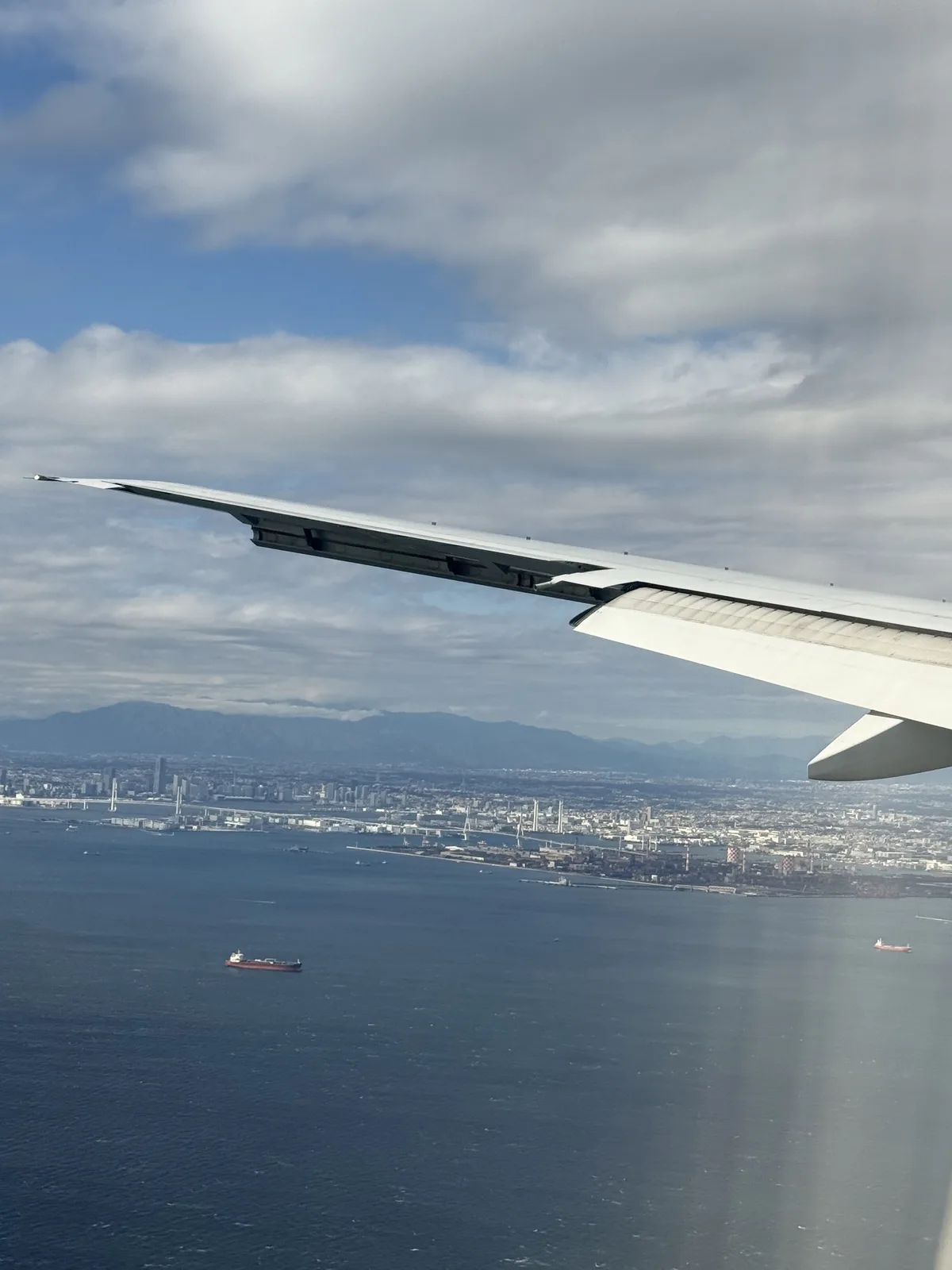
After a flight of just over two hours, KE2101 made its final approach into Tokyo Haneda.
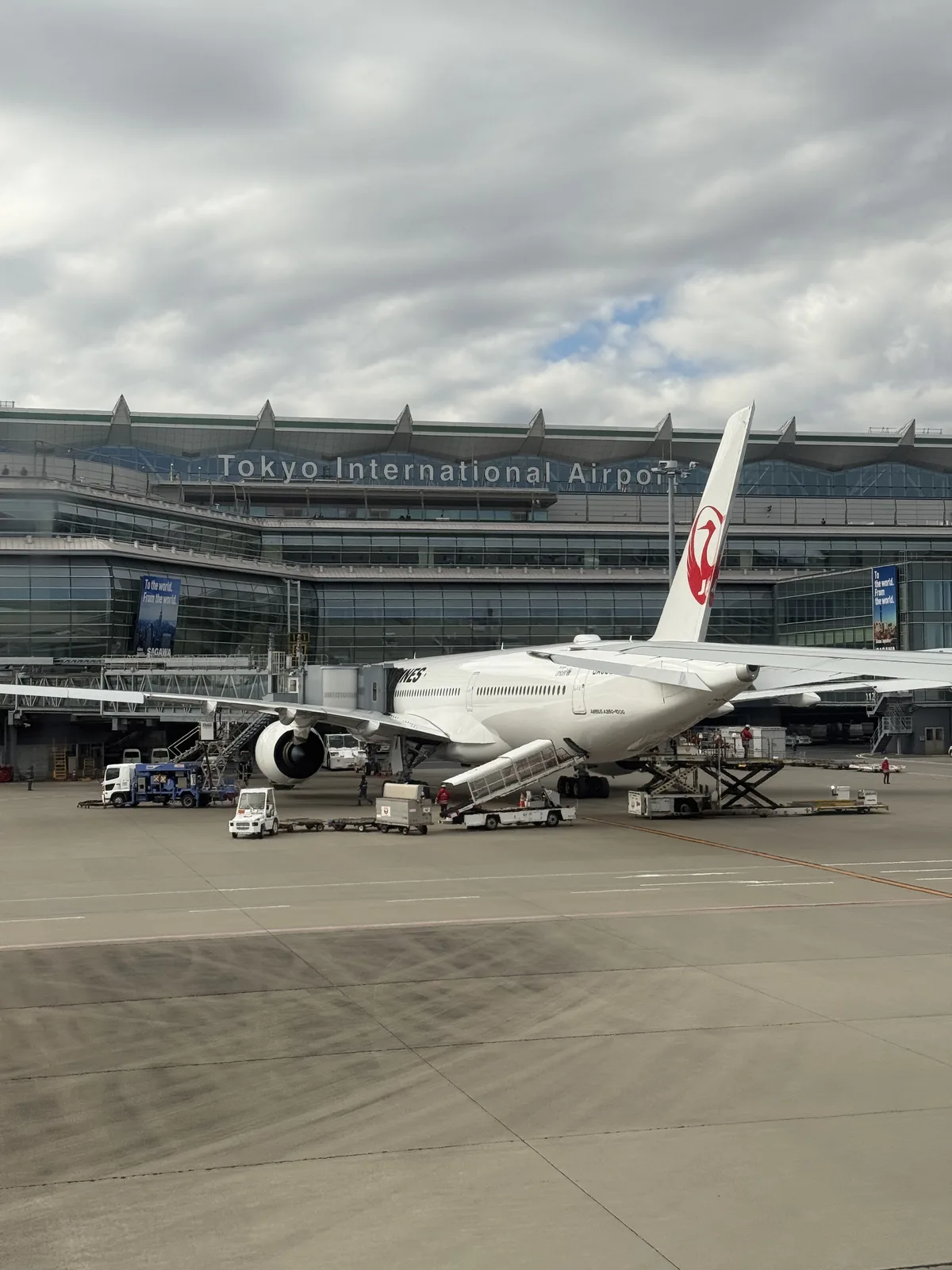
Korean Air uses Terminal 3 at Haneda. Arriving to a sea of Japan Airlines and ANA aircraft really drives home that this is Tokyo’s main gateway airport.
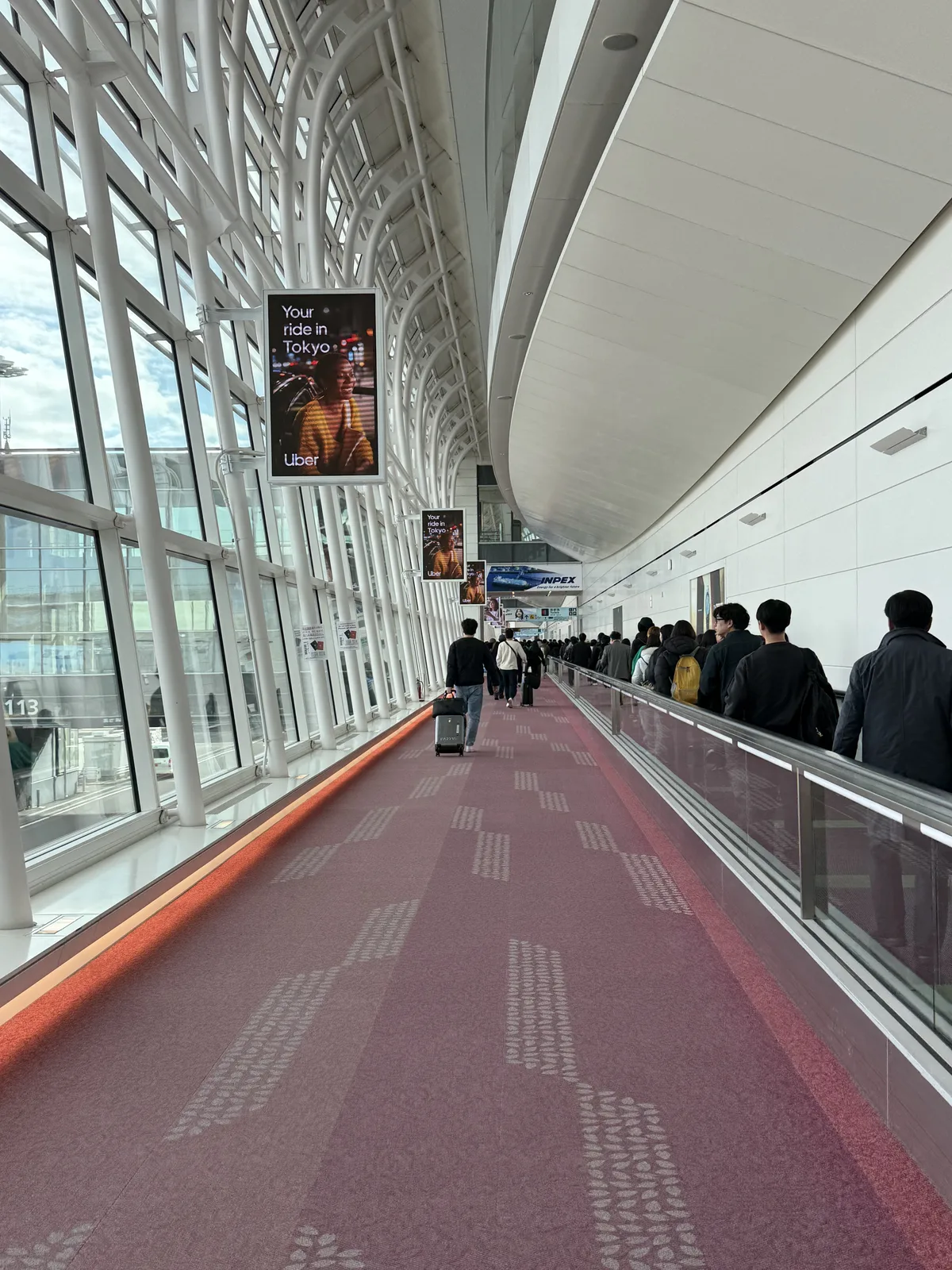
I’ve always used Narita for Tokyo trips, but the contrast in access is stark — Narita to central Tokyo takes over an hour, while Haneda to the city center is about 20 minutes by rail (though the fare is anything but cheap).
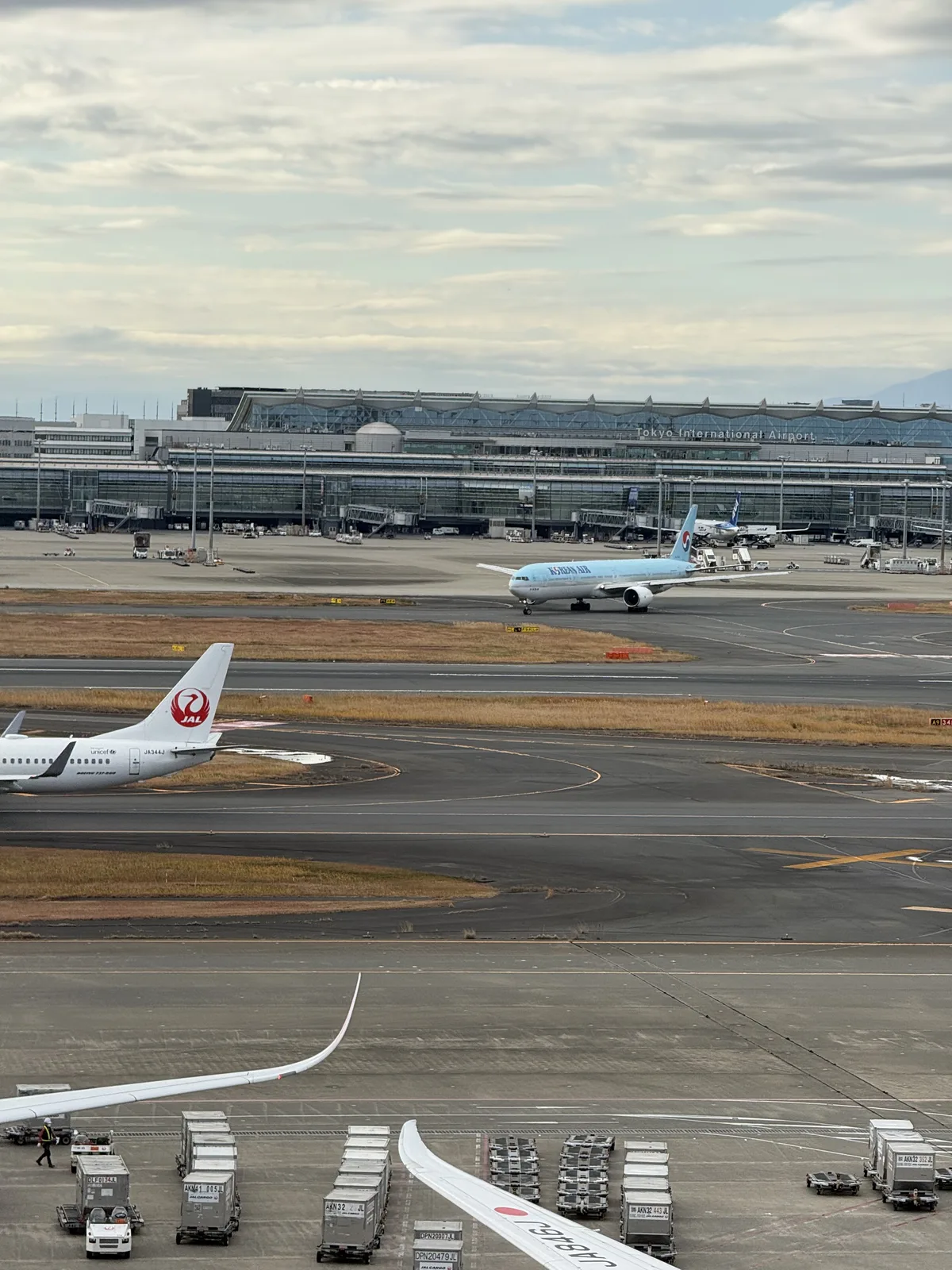
Immigration and baggage claim took a little over 30 minutes in total. With some time to spare before my next plan, I visited the Haneda airport observation deck — just in time to watch the same aircraft push back and head back to Gimpo.
That wraps up my Korean Air KE2101 GMP–HND review!
Summary
Pros
- Excellent airport access at both ends
- Decent in-flight meal for a short Japan route
- Comfortable, clean cabin
Cons
- Fares can be quite steep on this route when booking at full price